Google's AI Takes to the Stars
Picture a standard kitchen refrigerator. Now imagine it floating in low Earth orbit, silently crunching the complex mathematics that power modern artificial...
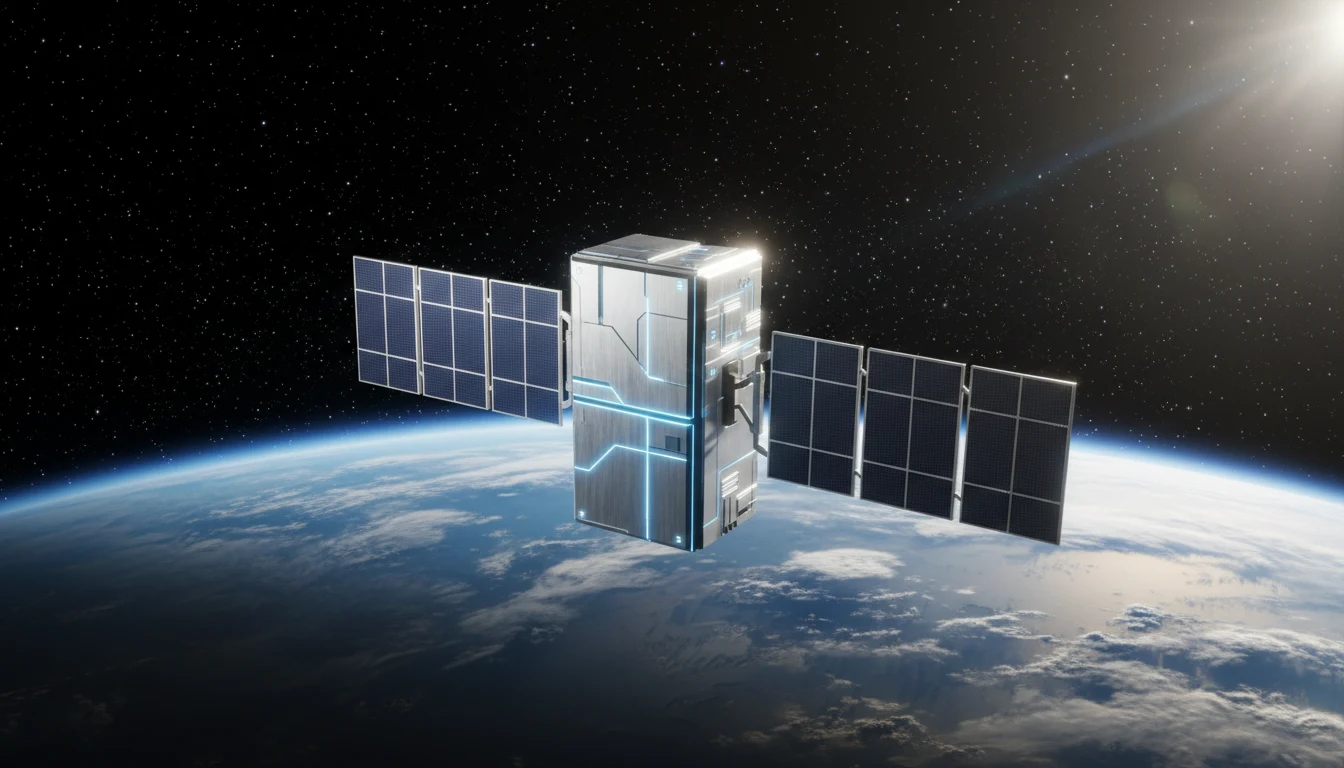
Picture a standard kitchen refrigerator. Now imagine it floating in low Earth orbit, silently crunching the complex mathematics that power modern artificial intelligence.
On October 1, this sci-fi scenario transitions into reality when Google launches its first experimental orbital AI data center, a satellite aptly named "MVP." It marks the maiden voyage of Project Suncatcher, Google’s ambitious "moonshot" initiative aimed at moving the heavy computational lifting of AI off our planet and into the cosmos.
The motivation behind this extraterrestrial push is rooted firmly in terrestrial problems. The artificial intelligence boom has a massive physical footprint. Earth-bound data centers require vast tracts of land, millions of gallons of water for cooling, and gigawatts of electricity to keep servers humming. As models grow larger, their appetite for power becomes increasingly unsustainable. Space offers an elegant, if technically daunting, alternative: abundant, unfiltered solar energy and an environment free from terrestrial real estate disputes. Tech leaders like Jeff Bezos and Elon Musk have previously floated similar ideas, but Google is the one putting physical hardware into orbit right now.
Inside the MVP satellite are four of Google’s custom Tensor Processing Units (TPUs). These are the same specialized chips Google uses on Earth to train massive AI models and run the inference processes that generate text, tokens, and images for users. To power them, the craft’s solar panels will generate about one kilowatt of electricity—roughly what it takes to run a standard hair dryer or microwave oven.
While a four-chip setup pales in comparison to the thousands of TPUs working in tandem in Google's ground facilities, the goal here is validation, not sheer computing dominance. Google wants to prove that its hardware can survive the harsh conditions of space and reliably perform AI workloads using nothing but the sun's energy.
Interestingly, Google is clearly eager to test these waters as quickly as possible. The company originally slated its first orbital tests for 2027, planning to use two fully custom-built satellites. Instead, they hit the fast-forward button. Google partnered with the satellite imagery company Planet Labs, opting to integrate its TPU chips into a spacecraft that Planet Labs had already built. This pragmatic pivot allowed Google to shave months, if not years, off their timeline.
The MVP launch is a modest beginning. Operating delicate silicon in space means battling cosmic radiation, extreme temperature fluctuations, and the logistical nightmare of beaming data back and forth to Earth. Yet, it represents a profound shift in how we think about the infrastructure of tomorrow. If Project Suncatcher proves successful, the next time you prompt an AI, the computational heavy lifting might just be happening among the stars, leaving a much lighter footprint on the Earth below.
Key Points
- Google is launching 'MVP', a refrigerator-sized satellite, on October 1 to test space-based AI computing.
- The satellite is equipped with four Google TPU chips and runs on about 1 kilowatt of solar power.
- Project Suncatcher aims to alleviate the immense energy and environmental burden of terrestrial data centers.
- Google accelerated the project by partnering with Planet Labs to retrofit an existing satellite instead of waiting until 2027 for a custom build.
Why It Matters
As the energy demands of artificial intelligence threaten to overwhelm terrestrial power grids, proving that AI computation can happen sustainably in orbit could redefine the future of global technology infrastructure.
Sources:
- Google's first Suncatcher orbital data center test launches October 1 — Ars Technica AI
更多专栏

Your Next Coworker is a Blob That Orders Burritos
For decades, enterprise software has been synonymous with sterile dashboards, en...

The Midnight Bill: Why AI Agents Demand Hard Budget Caps
The dream of artificial intelligence is to have a tireless digital assistant wor...

Beyond Transformers: How Mamba is Rewriting the Rules of AI Memory
Think about how a human reads a sprawling, thousand-page fantasy series. You don...