Turning AI Hallucinations Into a Musical Instrument
For decades, some of the most iconic sounds in modern music were born from technological mistakes. The gritty distortion of rock and roll originated from...
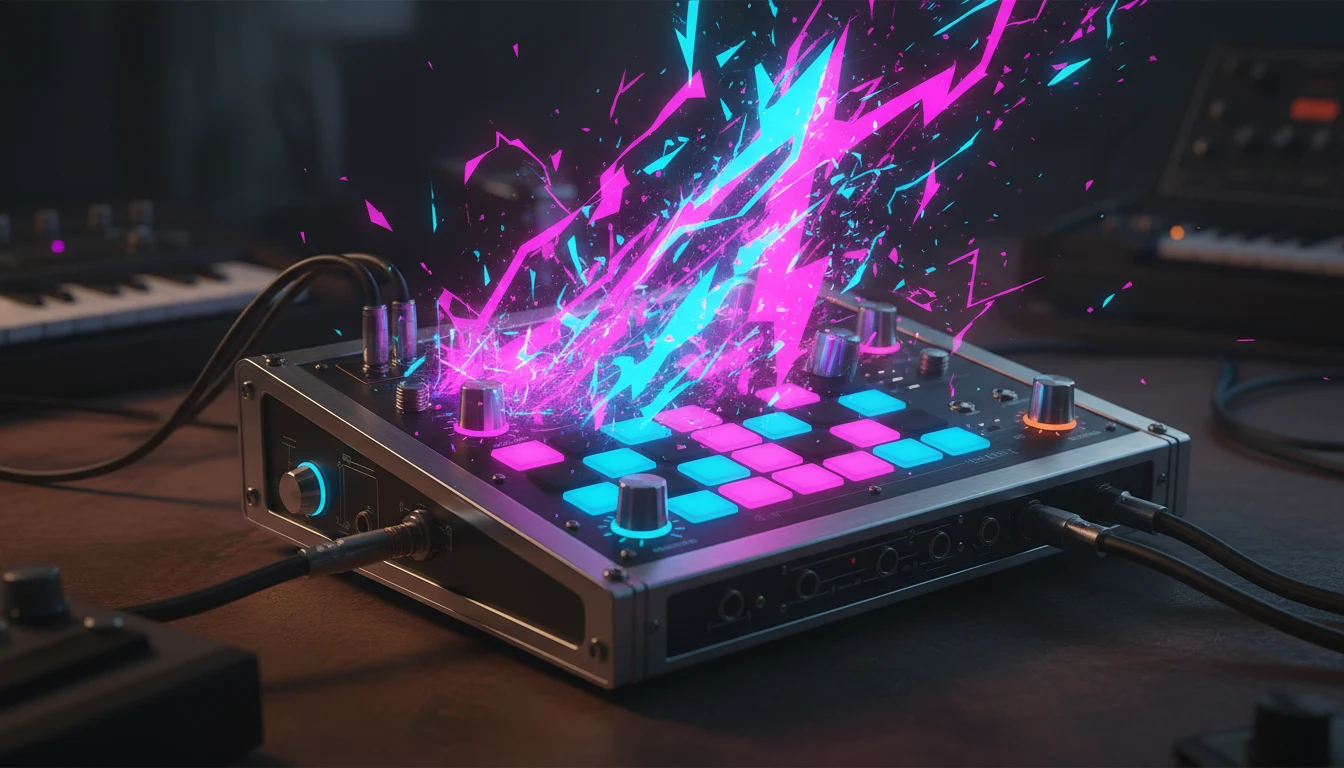
For decades, some of the most iconic sounds in modern music were born from technological mistakes. The gritty distortion of rock and roll originated from damaged amplifier cones, while the beloved squelch of acid house came from artists pushing the Roland TB-303 synthesizer far beyond its intended use. Today, as artificial intelligence sweeps through the music industry, a new generation of creators is asking: what happens if we intentionally break the AI?
The current landscape of AI music is largely dominated by cloud-based software that strives for polish. Tools that offer a "push-button, get-song" experience are designed to instantly generate tracks that sound like they belong on top-40 radio. While technically impressive, this frictionless process can feel sterile to artists who thrive on hands-on experimentation and sonic discovery.
Enter Engram, a new hardware sampler and groovebox developed by the music startup Thoughtful Things. Recently launched on Kickstarter, Engram takes a radically divergent approach to artificial intelligence. Instead of writing a song for you, it serves as a bizarre sonic laboratory. The device is built to deliberately harness AI "hallucinations"—those moments when a machine learning model gets confused and generates unpredictable, uncanny outputs. By feeding audio into the device, musicians can watch the AI mangle and mutate the sounds into entirely new, fragmented textures.
What makes this instrument particularly intriguing is its self-reliance. Engram does not require an internet connection to reach a massive server farm. Instead, it operates entirely offline, running a custom-trained "tiny AI" model locally on the hardware. This design choice transforms the AI from a distant, invisible service into a tangible, wildly unpredictable instrument sitting on a studio desk.
As AI continues to evolve, the distinction between a tool and a collaborator becomes increasingly blurred. Devices like Engram highlight a growing desire among creatives for technology that surprises them rather than simply following instructions. When an artist uses this sampler, they aren't just applying an effect; they are engaging in a chaotic dialogue with a neural network.
By pushing its internal audio models past their breaking points, Engram turns what software engineers typically view as catastrophic errors into raw musical material. It challenges the prevailing narrative that AI must be a flawless creator. In the realm of experimental music, perfection is often boring. The true frontier of human-AI collaboration might not lie in algorithms that can mimic pop stars, but in tools that embrace their own digital eccentricities, offering musicians a new kind of "fuzz pedal" for the artificial intelligence age.
Key Points
- Startup Thoughtful Things has launched Engram, an AI-powered sampler and groovebox, on Kickstarter.
- Instead of generating polished songs, the device deliberately uses AI hallucinations to mangle audio.
- Engram operates completely offline, running a custom 'tiny AI' locally on the hardware.
- It represents a shift from treating AI as a perfect ghostwriter to using it as an unpredictable creative tool.
Why It Matters
Engram challenges the trend of flawless, one-click AI generation by proving that digital imperfections and hallucinations can be powerful tools for artistic discovery.
Sources:
- Engram is a sampler that turns broken AI hallucinations into music — The Verge - AI
更多专栏

The Digital Dead Drop: How AI Agents Could Spread 'Worms'
In the world of espionage, spies often use a "dead drop"—a secret, shared locati...

The AI Gadget You Build Yourself: Meta Opens the Door for Makers
The recent wave of dedicated AI hardware has largely been defined by sleek, expe...

Why the Creators of Resident Evil Are Teaming Up With AI
Modern blockbuster video games have a scaling problem. The virtual worlds we lov...