The Surveillance Superpower Weaponized for Stalking
When you drive down a public road, you likely assume your journey is a relatively private matter. You go to work, visit friends, or run errands without...
When you drive down a public road, you likely assume your journey is a relatively private matter. You go to work, visit friends, or run errands without thinking twice. But in the age of AI-powered surveillance, the physical world is rapidly becoming as searchable as a web browser history.
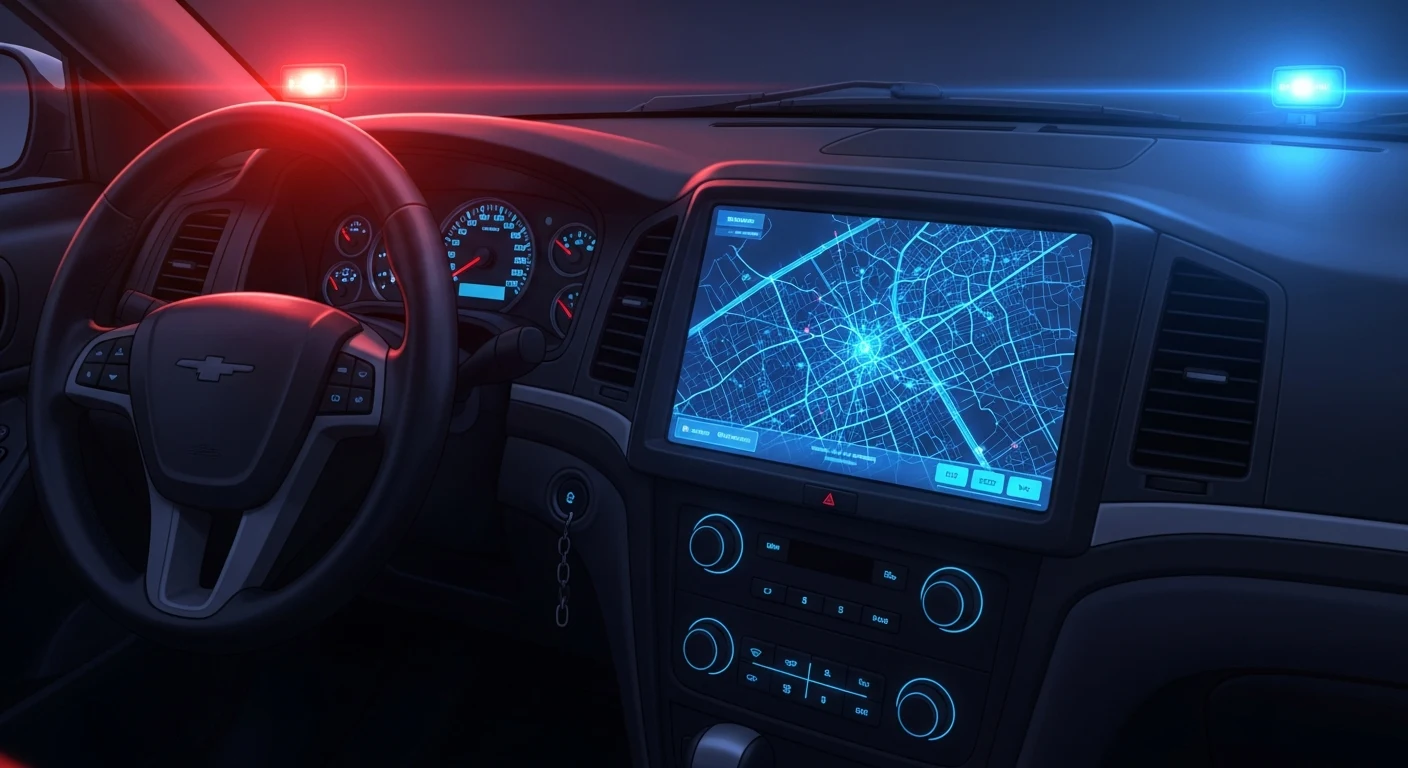
Consider the case of Jarmarus Brown, a police officer in Orange City, Florida. Over the summer of 2024, Brown utilized a law enforcement tool known as the Flock automated license plate reader (ALPR) system. But he wasn't tracking a fleeing suspect or searching for a stolen vehicle. Instead, he ran his ex-girlfriend's license plate through the system's database at least 69 times. His digital stalking extended to her family as well, searching for her mother's plate 24 times and her father's 15 times.
The behavior became so routine that a fellow officer sitting next to him in a police cruiser noticed the ex-girlfriend's vehicle image popped up on the screen. Despite a direct warning from his colleague that he could get in trouble, the temptation of having such profound access to someone's life proved difficult to resist.
To understand how this happens, we have to look at how systems like Flock operate. These are not your traditional red-light cameras. Flock ALPRs constantly document the cars that drive past them, feeding that data into a massive, AI-driven network. The system doesn't just read a plate; it logs the time, location, and direction of travel, stitching together a comprehensive map of a person's life. For law enforcement agencies, this is marketed as an invaluable asset for solving crimes. But for a citizen being secretly monitored by someone with a badge, it represents a profound and terrifying violation of privacy.
This incident highlights a glaring vulnerability in the deployment of AI surveillance technologies. When we grant authorities unprecedented visibility into our daily lives, we are relying on an honor system that is bound to fail without strict, enforced safeguards. The core issue isn't the technology itself, but the human element controlling it.
As AI systems become more integrated into our civic infrastructure, the conversation must shift. It is no longer just about what these powerful tools can achieve for public safety, but what their operators should be permitted to do. Building smart, safe cities requires more than just installing intelligent cameras; it demands equally intelligent oversight to ensure those tools protect citizens rather than stalk them.
Key Points
- A Florida police officer used the Flock ALPR system to track his ex-girlfriend and her family over 100 times.
- Flock's AI-driven network creates a highly detailed, searchable database of everyday vehicle movements.
- The incident exposes how easily public safety tools can be weaponized for personal stalking without strict oversight.
- Robust auditing and access controls are essential as AI surveillance becomes standard in law enforcement.
Why It Matters
As AI surveillance networks expand, highlighting cases of misuse underscores the urgent need for strict oversight and digital privacy protections for everyday citizens.
Sources:
更多专栏

Your Next Coworker is a Blob That Orders Burritos
For decades, enterprise software has been synonymous with sterile dashboards, en...

The Midnight Bill: Why AI Agents Demand Hard Budget Caps
The dream of artificial intelligence is to have a tireless digital assistant wor...

Beyond Transformers: How Mamba is Rewriting the Rules of AI Memory
Think about how a human reads a sprawling, thousand-page fantasy series. You don...