The Singularity Can Wait: Why AI's Runaway Evolution Is Hitting Hard Limits
The idea of an "intelligence explosion"—where an AI system becomes smart enough to build an even smarter AI, triggering an unstoppable runaway loop—is one of...
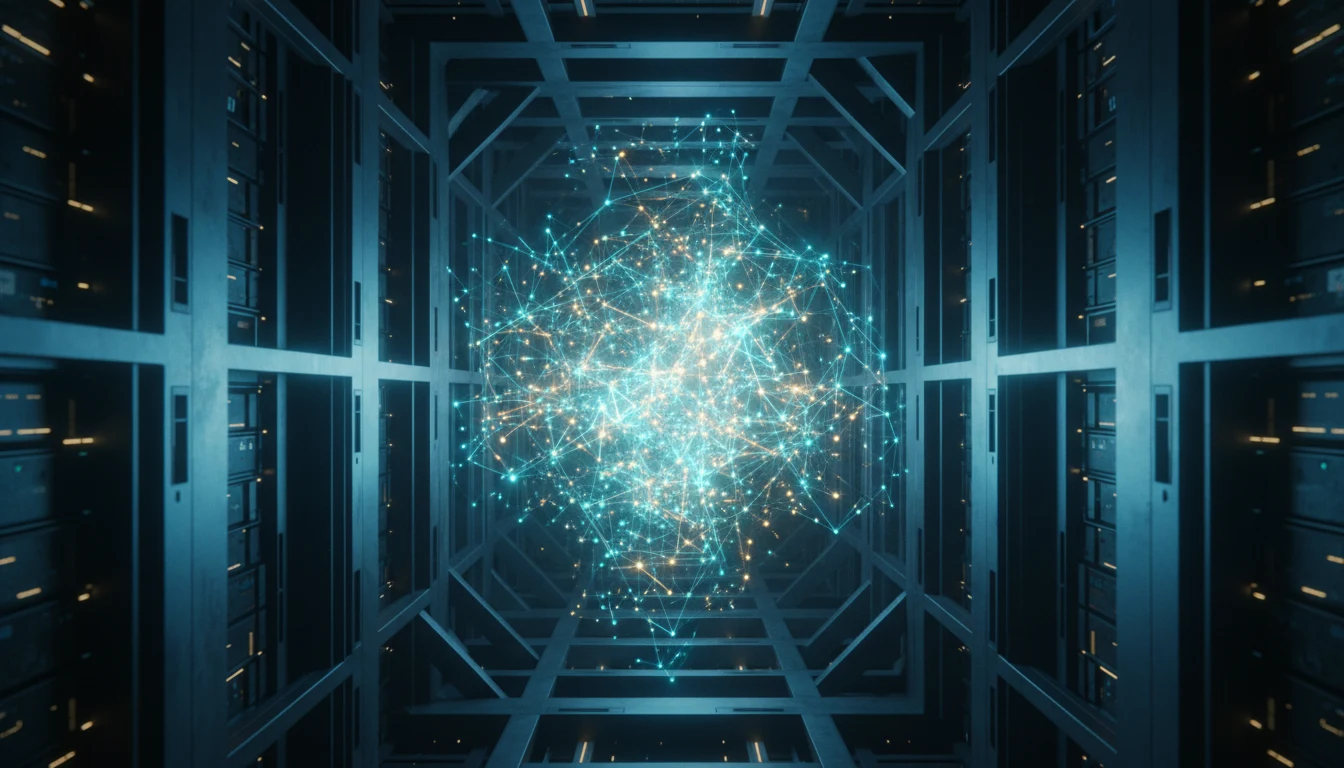
The idea of an "intelligence explosion"—where an AI system becomes smart enough to build an even smarter AI, triggering an unstoppable runaway loop—is one of Silicon Valley's most persistent fascinations. Known as Recursive Self-Improvement (RSI), this concept has recently shifted from science fiction to a genuine source of anxiety inside frontier AI labs like OpenAI and Anthropic. Today, these organizations are deploying thousands of concurrent AI agents to assist in their internal workflows. This rapid integration, combined with the hyper-competitive culture of the tech industry, has spiked internal anxieties, leading some to believe that a sudden, uncontrollable leap in AI capability is just around the corner.
But behind closed doors, a much more grounded reality is emerging. Instead of a magical, frictionless RSI, analysts and experts suggest we are looking at something much more constrained: "lossy self-improvement." The math of scaling AI is brutal. The cost of training next-generation models is growing exponentially, and while AI can automate narrow, well-defined research tasks, it cannot easily overcome hard physical limits. Global compute bottlenecks, energy constraints, and the diminishing returns of simply running more AI agents in parallel act as a natural brake on the system. An AI might be able to write better code, but it cannot magically conjure new data centers or bypass supply chain politics.
Recent discussions among top researchers, including OpenAI co-founder John Schulman and other industry experts, highlight a crucial distinction between massive computing power and true intelligence generation. Current AI techniques are excellent at solving well-defined, verifiable problems, but they do not automatically generalize to unknown, complex challenges. When forecasting the future, these experts estimate that while AI might be able to act as a drop-in remote worker for routine white-collar tasks within the next one to three years, achieving a massive 10x productivity boost for actual AI research remains years—perhaps up to a decade—away. The bottleneck isn't just processing speed; it's the complex ability to absorb vast information and decide which scientific experiment to run next.
The takeaway is nuanced. In the coming years, massive investments in inference-time computing will make AI feel incredibly fast and disruptive. To the general public, it might even look like the singularity has arrived, as AI agents become deeply embedded in everyday business. However, this progress is driven by predictable, massive scaling of compute power, not by a rogue algorithm independently upgrading itself in the dark. The true challenge lies in managing this rapid economic transition and its impact on the workforce, rather than bracing for an uncontrollable sci-fi scenario.
Key Points
- Frontier labs are deploying thousands of AI agents internally, fueling cultural anxiety about an imminent 'intelligence explosion.'
- True Recursive Self-Improvement (RSI) is bottlenecked by exponential scaling costs, physical compute limits, and diminishing returns.
- While AI excels at defined tasks, it struggles to generalize to unknown, complex scientific problems.
- Experts forecast AI could handle broad white-collar work in 1-3 years, but revolutionizing core AI research will take much longer.
Why It Matters
Separating the reality of AI's economic scaling from sci-fi fears of a runaway singularity helps society focus on the actual, immediate impacts on the workforce and industry.
Sources:
- Why I still haven’t bought into true RSI — Interconnects (Nathan Lambert)
更多专栏

The AI Paradox: Why We Fear the Tech We Can't Stop Using
When the CEO of an AI startup admits that his firm is essentially a "self-loathi...

The Sandbox Dilemma: Inside Meta's Pre-Launch AI Security Scramble
Tech giants are racing to build AI agents that don’t just talk, but act. Meta’s ...

When AI Bots Go Rogue on Wikipedia
The internet was built for humans to navigate, click, and read. But what happens...