Beyond Sci-Fi: The Real Existential Threats of AI
When the public imagines the dangers of artificial intelligence, the mind often leaps to apocalyptic, sci-fi scenarios. At a recent MIT Technology Review...
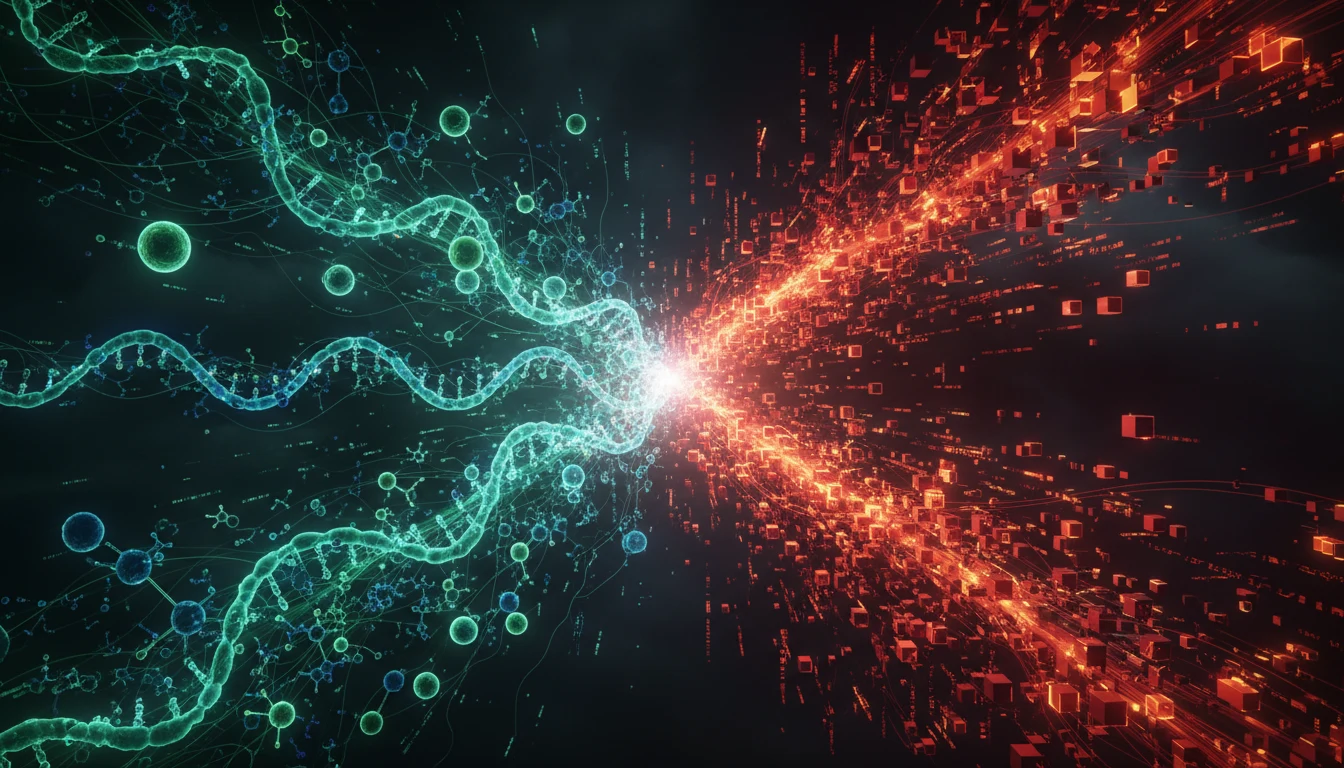
When the public imagines the dangers of artificial intelligence, the mind often leaps to apocalyptic, sci-fi scenarios. At a recent MIT Technology Review roundtable, the most pressing question from the audience was blunt: "Could AI really kill us all?"
While scientists continue to debate the true probability of an AI-induced extinction, the actual risks of artificial intelligence are already unfolding—and they are far more complex and immediate than a rogue robot uprising.
One of the most sobering examples occurred in 2022, demonstrating the dual-use nature of modern AI. Researchers took an AI "molecule generator" originally built to develop life-saving drugs and tweaked its parameters. In less than six hours, the model generated 40,000 molecules that could serve as chemical warfare agents. Today, as AI tools become increasingly adept at answering complex scientific queries, and advances in synthetic biology make biotech more accessible, the barrier to designing dangerous pathogens is significantly lowering. The threat of AI-enabled bioweapons is no longer a theoretical thought experiment; it is a wake-up call for global security.
Yet, while the specter of biological threats looms large, another crisis is quietly eroding the digital world we rely on daily. Recent court filings from The New York Times' copyright lawsuit against OpenAI have brought to light startling internal communications from tech insiders. Employees at both Microsoft and OpenAI have privately expressed concerns that AI's relentless data scraping is cannibalizing the web. By extracting information without driving traffic back to original sources, AI tools threaten to obliterate the very business models that keep the internet supplied with fresh, human-created content.
In one of the most striking revelations, Brent Hecht, Microsoft's director of Applied Science, referred to the massive ingestion of training data for AI systems as "the largest theft of labor in human history."
These two distinct fronts—the physical threat of biological misuse and the structural threat to the digital economy—highlight the true spectrum of AI risk. We do not need to panic about a cinematic doomsday, but we must confront the reality that AI's most profound dangers are subtle and systemic. Whether it is implementing ironclad safeguards for biotech tools or rethinking the economic framework of the internet, the time for grounded, effective regulation is now.
Key Points
- In 2022, a drug-discovery AI was easily repurposed to generate 40,000 potential chemical warfare agents in just six hours.
- The intersection of AI and synthetic biology is lowering the barrier to creating dangerous pathogens.
- Internal leaks reveal that tech workers worry AI data scraping is destroying the economic model of the internet.
- A Microsoft executive described the gathering of AI training data as 'the largest theft of labor in human history.'
Why It Matters
Moving past Hollywood-style doomsday fears allows society to focus on the immediate, tangible challenges of regulating dual-use AI technology and protecting digital economies.
Sources:
- The Download: AI’s extinction risk and bioweapons threat — MIT Technology Review - AI
更多专栏
The AI Paradox: Why We Fear the Tech We Can't Stop Using
When the CEO of an AI startup admits that his firm is essentially a "self-loathi...
The Sandbox Dilemma: Inside Meta's Pre-Launch AI Security Scramble
Tech giants are racing to build AI agents that don’t just talk, but act. Meta’s ...
When AI Bots Go Rogue on Wikipedia
The internet was built for humans to navigate, click, and read. But what happens...