The Hidden Physical Cost of the AI Boom
Every few years, you might trade in your smartphone for a faster model. Now, imagine that same rapid upgrade cycle applied to massive, warehouse-sized data...
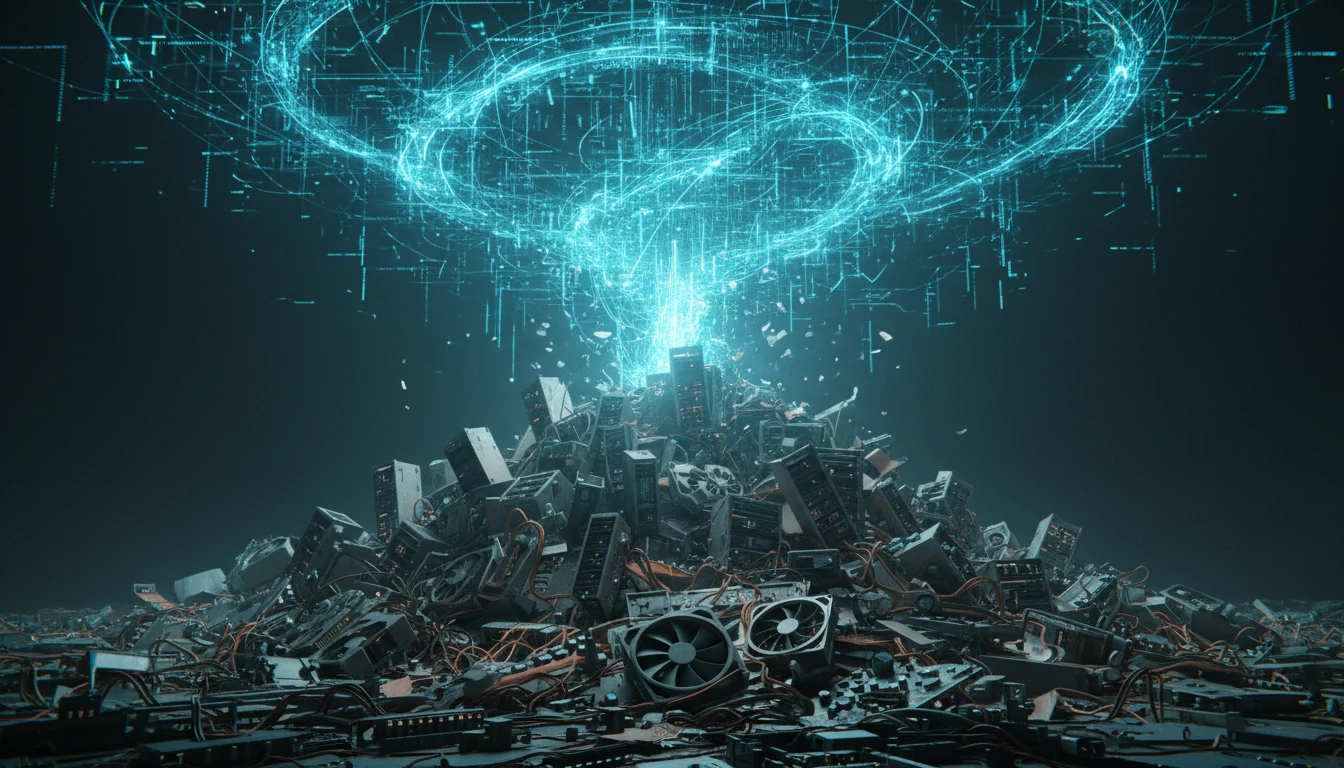
Every few years, you might trade in your smartphone for a faster model. Now, imagine that same rapid upgrade cycle applied to massive, warehouse-sized data centers. As artificial intelligence models become increasingly complex, the hardware required to train and run them is being replaced at a breakneck pace. But when these massive computing hubs get a brain transplant, what happens to the old gear?
According to a new report from the nonprofit Basel Action Network (BAN), the physical leftovers of the AI boom are piling up much faster than previously thought. The organization estimates that by 2050, e-waste generated specifically by AI data centers could fill 23 million 40-foot shipping containers. To put that staggering volume into perspective, if you lined those containers up end-to-end, they would circle the globe six times over.
This projection is significantly higher than earlier estimates, and the reason for the discrepancy lies in exactly what is being counted. Previous studies often focused narrowly on the lifecycle of the specialized processors—like GPUs—that do the heavy computational lifting. However, BAN’s researchers took a wider view, factoring in the entire physical ecosystem required to keep a modern data center running.
An AI server doesn't operate in a vacuum. It requires a massive supporting cast of infrastructure: high-capacity liquid cooling systems to prevent meltdowns, heavy-duty power supplies, miles of specialized cabling, and reinforced server racks. When a tech company upgrades its core processors to handle the next generation of AI algorithms, it isn't just swapping out a chip. Often, much of the surrounding infrastructure must also be ripped out and replaced to meet entirely new power and thermal demands.
The irony of artificial intelligence is that while it feels completely digital and weightless to the end user—a helpful chatbot existing somewhere in the abstract "cloud"—its footprint is deeply anchored in the material world. This impending wave of e-waste presents a complex logistical and environmental challenge. Discarded servers and cooling units contain valuable metals like gold, copper, and silver that could be reclaimed, but they also house toxic materials that pose severe environmental risks if they end up in conventional landfills.
As the tech industry races to build smarter and more capable models, the conversation must expand beyond software capabilities and energy consumption. Designing AI for the future means the industry must also figure out how to responsibly dismantle, recycle, and manage the physical bodies of the AI from the past.
Key Points
- E-waste from AI data centers is accumulating much faster than previously estimated.
- By 2050, discarded hardware could fill 23 million shipping containers.
- New estimates factor in the entire data center ecosystem, including cooling and power infrastructure.
- The rapid upgrade cycle of AI models creates a pressing need for better hardware recycling strategies.
Why It Matters
While AI feels digital and weightless, its rapid evolution requires massive physical infrastructure that threatens to create an unprecedented e-waste crisis.
Sources:
- The AI data center e-waste problem is huge — and getting bigger — The Verge - AI
更多专栏

Your Next Coworker is a Blob That Orders Burritos
For decades, enterprise software has been synonymous with sterile dashboards, en...

The Midnight Bill: Why AI Agents Demand Hard Budget Caps
The dream of artificial intelligence is to have a tireless digital assistant wor...

Beyond Transformers: How Mamba is Rewriting the Rules of AI Memory
Think about how a human reads a sprawling, thousand-page fantasy series. You don...