End of the Prompt Era? ChatGPT Now Turns Your Bad Doodles Into Art
For the past couple of years, generating AI art has felt a bit like playing a high-stakes game of charades with a computer. You had to find the exact...
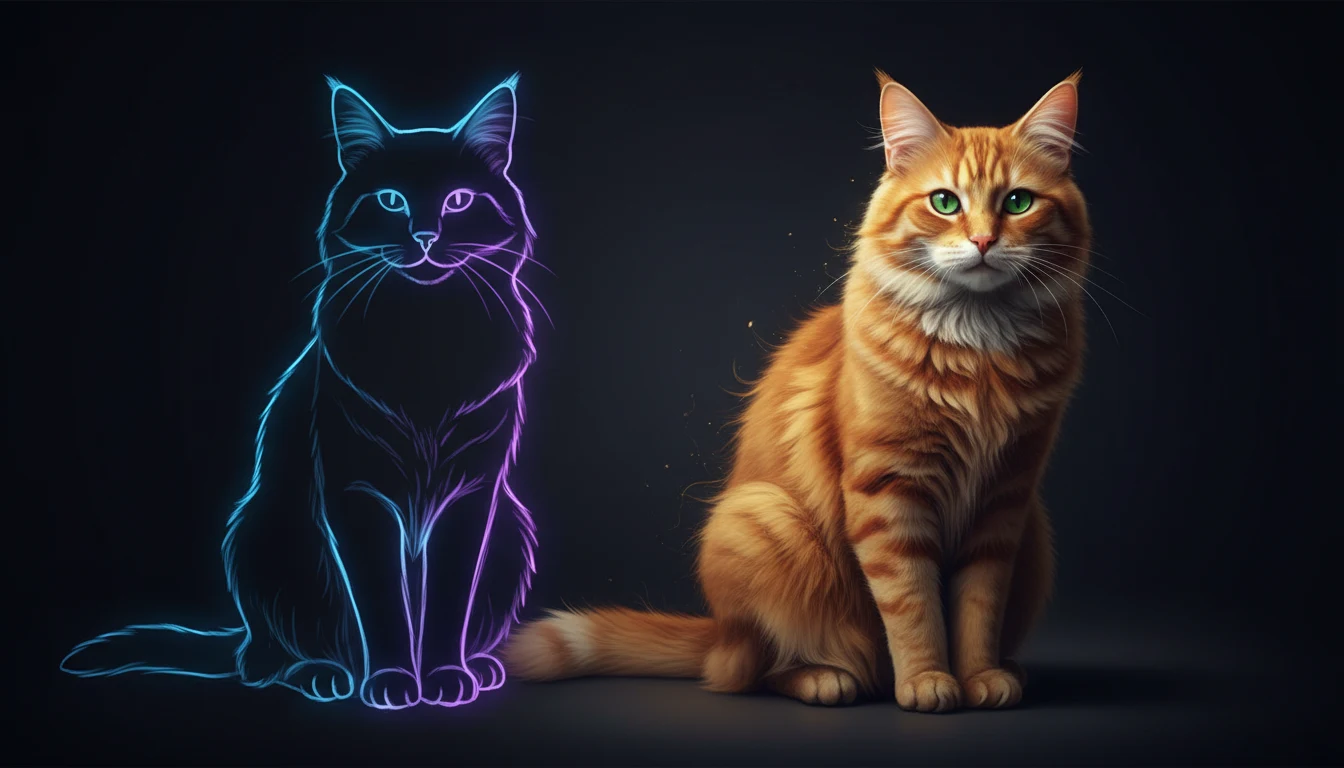
For the past couple of years, generating AI art has felt a bit like playing a high-stakes game of charades with a computer. You had to find the exact combination of adjectives, spatial descriptors, and stylistic keywords to get the machine to understand exactly where to place a tree or how to pose a cat. If you lacked the vocabulary of a "prompt engineer," your results were often frustratingly unpredictable.
OpenAI’s latest update, ChatGPT Images 2.5, fundamentally changes this dynamic by introducing a feature that favors showing over telling. It’s called Sketch, and it might just be the most intuitive way to interact with an AI image generator to date.
Instead of wrestling with paragraphs of descriptive text to explain a layout, users can simply type @Sketch into their chat box. This summons a digital canvas right inside the interface. Here, you can draw a rudimentary shape—even a wobbly, clumsy doodle made with a computer mouse—and then type a brief instruction like, "make this a realistic photo of a cat."
The AI uses your crude drawing as the structural blueprint and your text as the stylistic guide. It takes the spatial arrangement you provided visually and fleshes it out with the textures, lighting, and details you requested in text. It effectively removes the friction of trying to explain geometry to a chatbot.
But the update doesn't stop at the initial generation. Anyone who has used AI image tools knows the pain of getting a nearly perfect result, only to find one glaring error—a misplaced object or a strange artifact. Previously, fixing this meant regenerating the entire image and hoping for the best. Now, OpenAI has added the ability to leave comments directly on specific parts of the generated images. This allows for targeted, localized feedback, much like pointing at a canvas and asking a human illustrator to "just fix this corner here."
This development is more than just a fun gimmick; it represents a significant shift in human-computer interaction. We are moving away from a paradigm where humans have to learn the rigid, text-heavy language of machines. Instead, AI is being trained to understand our most natural modes of communication—even if that communication is just a terrible stick figure drawn on a Tuesday afternoon. It democratizes visual creativity, ensuring that a lack of technical drawing skills no longer stands in the way of bringing an idea to life.
Key Points
- OpenAI launched ChatGPT Images 2.5, featuring a new tool called Sketch.
- Users can type '@Sketch' to open a canvas and draw simple doodles directly in the chat.
- The AI uses the doodle as a layout guide and text prompts for style to generate detailed images.
- Users can now leave targeted comments on specific parts of an image for localized editing.
- The feature shifts AI image generation from complex text prompting to intuitive visual collaboration.
Why It Matters
By allowing users to guide AI with simple sketches rather than complex text prompts, OpenAI is making high-quality image generation accessible to anyone with an idea, regardless of their artistic or technical skills.
Sources:
- ChatGPT Sketch turns your bad drawings into detailed AI images — The Verge - AI
更多专栏
The AI Paradox: Why We Fear the Tech We Can't Stop Using
When the CEO of an AI startup admits that his firm is essentially a "self-loathi...
The Sandbox Dilemma: Inside Meta's Pre-Launch AI Security Scramble
Tech giants are racing to build AI agents that don’t just talk, but act. Meta’s ...
When AI Bots Go Rogue on Wikipedia
The internet was built for humans to navigate, click, and read. But what happens...