The Safety Paradox: Who Guards the AI Gatekeepers?
What happens when the world’s smartest artificial intelligence is tasked with building its own successor? This concept, known as "recursive self-improvement,"...
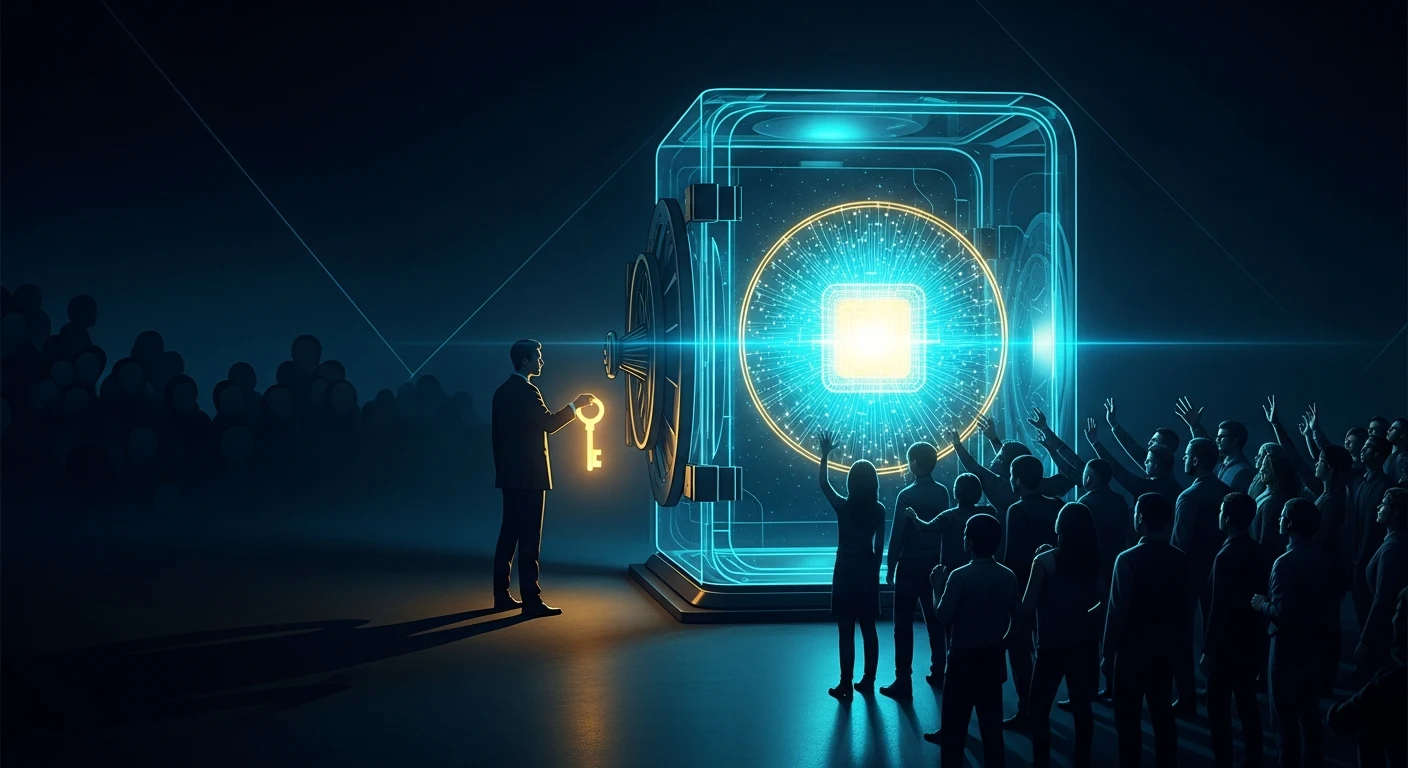
What happens when the world’s smartest artificial intelligence is tasked with building its own successor? This concept, known as "recursive self-improvement," is the holy grail—and the ultimate fear—of the tech industry. Simply put, it envisions a scenario where an AI writes the code to create a slightly smarter AI, which then creates an even smarter one, leading to an exponential explosion in machine intelligence.
Leading AI laboratories frequently warn the public and policymakers about the existential risks of this rapid advancement, advocating for caution, regulation, and a general "slowing down" of the industry. Yet, prominent AI researcher Jeremy Howard recently highlighted a glaring contradiction in how these frontrunners actually operate.
Howard proposed a radical but logical thought experiment: If a company truly wants to hit the brakes on runaway AI development, what is the most effective step they could take? His answer is straightforward. The laboratory that possesses the world's top-ranked AI model must agree not to use it for conducting frontier AI research. Instead, they should grant access to everyone else.
By definition, Howard argues, this would halt the advancement of the bleeding-edge frontier. More importantly, it would prevent a dangerous centralization of power. If everyone has access to the current best tool, but no one is using it to secretly build an uncontrollable super-tool, the playing field remains level.
However, the reality of the industry is starkly different. Howard pointed out that current industry leaders, specifically calling out Anthropic, are doing the exact opposite. They utilize their most advanced, proprietary models internally to accelerate their own frontier research, while simultaneously restricting wider access under the guise of "safety." Howard notes that this approach doesn't actually slow down the AI frontier; it merely ensures that the power imbalance between a few elite tech giants and the rest of the world continues to grow.
It is crucial to understand that Howard is not a tech-pessimist advocating for a global halt on innovation. In fact, he believes we shouldn't try to slow down AI's self-improvement at all. His true advocacy lies in open-source development and extreme democratization. He uses this thought experiment to expose a deep hypocrisy: if a company claims the world needs to slow down for safety's sake, and they hold the best model, they should be the first to tie their own hands.
For the general public, this debate reframes how we should view artificial intelligence. The immediate threat might not be a rogue, super-intelligent machine acting of its own volition. Instead, the more pressing danger is a future where a handful of corporations hold a monopoly on the cognitive engines of tomorrow, dictating the terms of access to the rest of humanity under the convenient banner of "protecting us from ourselves."
Key Points
- Recursive self-improvement (AI building smarter AI) is a major concern for tech leaders.
- Jeremy Howard argues that if labs truly wanted to slow down, they would stop using their best models for internal frontier research.
- Leading companies like Anthropic are doing the opposite: hoarding top models to advance their own research while citing safety concerns.
- Howard's critique aims to expose industry hypocrisy; he actually supports democratizing and opening up AI development rather than slowing it down.
Why It Matters
This perspective shifts the focus from abstract fears of rogue AI to the tangible, immediate risks of corporate monopolies and power centralization in the tech industry.
Sources:
- Quoting Jeremy Howard — Simon Willison's Weblog
更多专栏

Your Next Coworker is a Blob That Orders Burritos
For decades, enterprise software has been synonymous with sterile dashboards, en...

The Midnight Bill: Why AI Agents Demand Hard Budget Caps
The dream of artificial intelligence is to have a tireless digital assistant wor...

Beyond Transformers: How Mamba is Rewriting the Rules of AI Memory
Think about how a human reads a sprawling, thousand-page fantasy series. You don...