Baking Fake Scrolls to Read Real History: AI's Quest in Herculaneum
When Mount Vesuvius erupted in 79 AD, it didn't just freeze the city of Pompeii in time; it also flash-fried a magnificent private library in the neighboring...
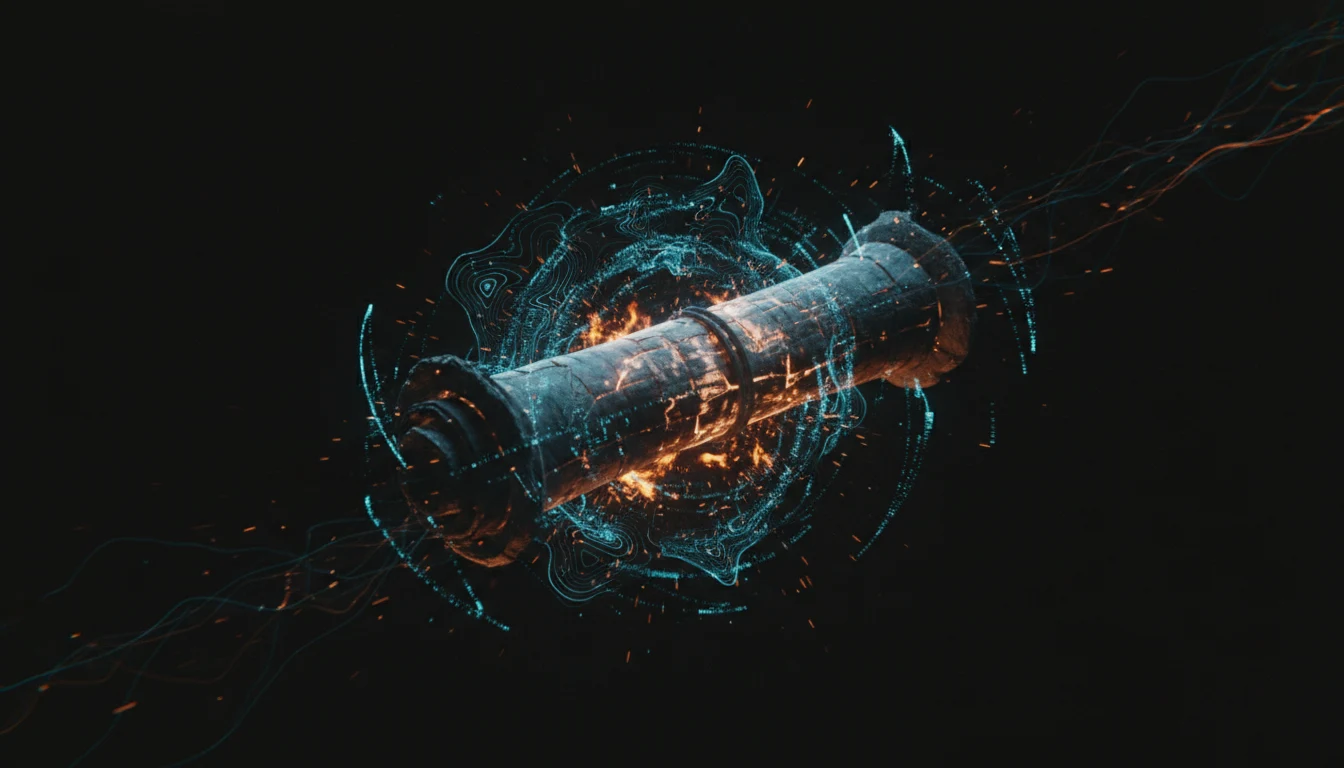
When Mount Vesuvius erupted in 79 AD, it didn't just freeze the city of Pompeii in time; it also flash-fried a magnificent private library in the neighboring town of Herculaneum. Hundreds of papyrus scrolls containing ancient Greek and Latin philosophy were instantly transformed into lumps of charcoal by superheated pyroclastic gas. For nearly three centuries since their discovery, these artifacts have presented a tantalizing but cruel paradox to historians: the classical texts are right there, but attempting to physically unroll the fragile, carbonized scrolls instantly turns them to dust.
Enter the "Vesuvius Challenge," a global, ongoing initiative that leverages crowdsourced machine learning and advanced 3D X-ray mapping to digitally unwrap these ancient texts. The goal is to read the unreadable without ever physically opening the scrolls. However, to train an AI to read invisible letters hidden inside a burnt log, scientists needed a highly reliable way to prioritize their efforts.
As detailed in a recent paper published in the journal PLoS ONE, researchers took an unconventional and highly practical approach: they decided to reverse-engineer the Roman catastrophe. The team meticulously created their own modern papyrus scrolls, wrote on them, and then intentionally baked them to mimic the catastrophic thermal effects of the ancient volcanic eruption.
Why destroy perfectly good modern papyrus? The objective was to validate a specialized screening technique designed to detect lead-based ink. Reading traditional carbon-based ink on a carbonized papyrus scroll is notoriously difficult for AI models—it is essentially like trying to find a specific piece of coal in a dark coal mine. Lead-based ink, on the other hand, leaves a distinct signature that stands out under specific scanning techniques.
By practicing on their homemade "charred scrolls," the researchers successfully validated a method to spot this metallic ink. Now, they can confidently scan the 600-plus unopened Herculaneum scrolls—believed to be the working library of the Epicurean philosopher Philodemus—to identify which ones contain lead ink. These specific scrolls will become the prime candidates for the intensive, AI-driven digital unwrapping process, drastically increasing the chances of recovering lost literary works.
This breakthrough represents a fascinating intersection of ancient history and cutting-edge technology. For decades, scholars assumed these texts were permanently erased by nature. This project highlights a profound shift in how we view artificial intelligence: far from just a tool for generating modern content, machine learning is acting as a non-destructive time machine, rescuing human knowledge that was thought to be consumed by fire two millennia ago.
Key Points
- The 79 AD eruption of Mount Vesuvius carbonized hundreds of papyrus scrolls in Herculaneum, making them too fragile to open.
- The Vesuvius Challenge uses machine learning to digitally unwrap and read these scrolls without touching them.
- Researchers baked modern replica scrolls to test a screening method for detecting lead-based ink.
- Identifying scrolls with lead-based ink helps scientists prioritize which of the 600+ unopened scrolls the AI should focus on first.
Why It Matters
It highlights how machine learning is revolutionizing non-destructive archaeology, allowing us to recover lost human knowledge without damaging the fragile artifacts that hold it.
Sources:
- Scientists develop new method for deciphering ancient scrolls — Ars Technica AI
更多专栏

Your Next Coworker is a Blob That Orders Burritos
For decades, enterprise software has been synonymous with sterile dashboards, en...

The Midnight Bill: Why AI Agents Demand Hard Budget Caps
The dream of artificial intelligence is to have a tireless digital assistant wor...
Beyond Transformers: How Mamba is Rewriting the Rules of AI Memory
Think about how a human reads a sprawling, thousand-page fantasy series. You don...