Out of the Screen: How Anthropic is Giving AI Physical Control
If you picture a modern scientific breakthrough, you might imagine a sudden "aha!" moment in a pristine laboratory. The reality, however, is often much more...
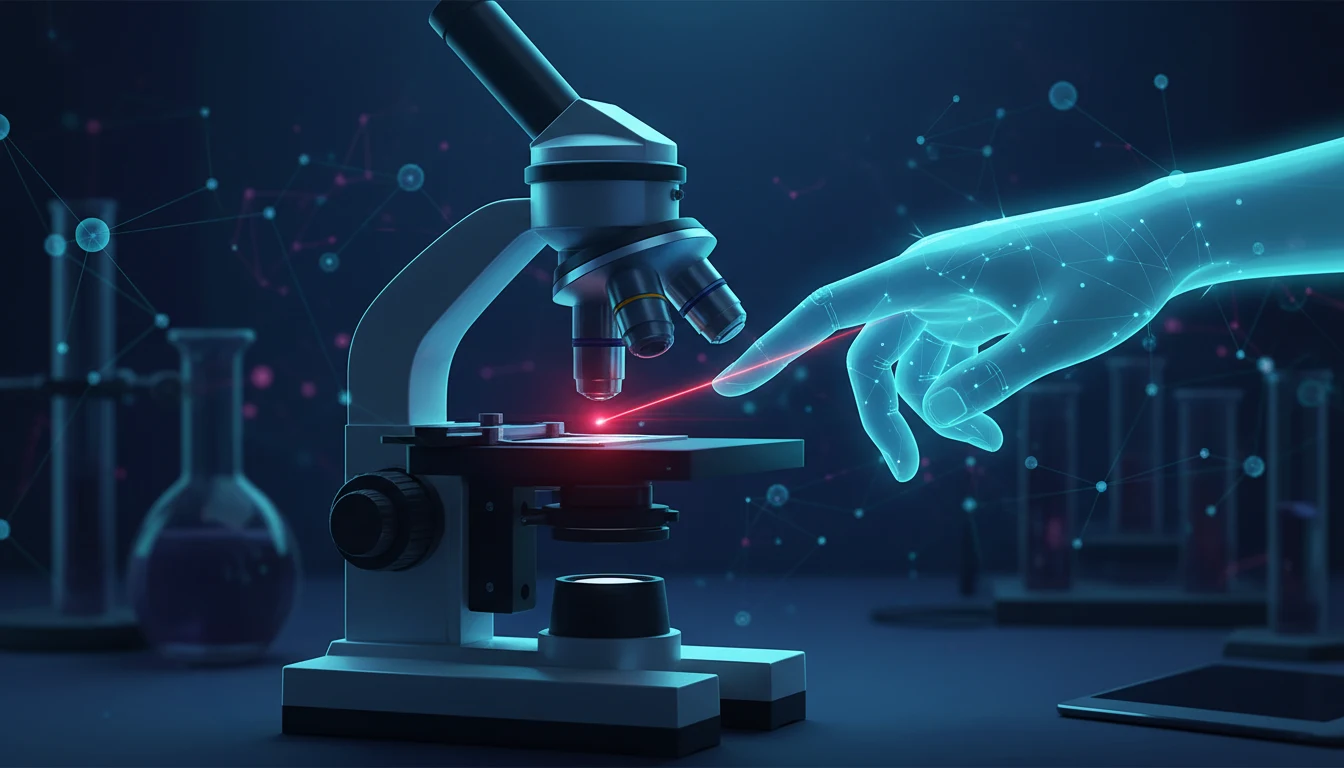
If you picture a modern scientific breakthrough, you might imagine a sudden "aha!" moment in a pristine laboratory. The reality, however, is often much more tedious. Before a scientist can even begin an experiment, they usually have to spend weeks—or even months—writing custom software just to get different pieces of equipment to communicate. A microscope from one manufacturer and a laser from another rarely speak the same digital language. They rely on proprietary protocols and closed ecosystems, forcing researchers to become amateur software engineers just to conduct their core science.
This frustrating bottleneck is exactly what caught the attention of Alek Kemeny, a technical staffer at the AI company Anthropic. While visiting the HHMI Janelia Research Campus in Virginia, Kemeny watched neuroscientist Arco Bast meticulously coordinate rotating laser beams, cameras, and microscopes for a complex experiment on brain memory formation. Bast had managed to build a custom interface to sync the hardware, but the sheer effort required sparked an idea in Kemeny: What if artificial intelligence could act as a universal translator for physical hardware?
That realization led to Anthropic’s new "Model Hardware Standard" (MHS), a project recently launched as a research preview. MHS is essentially a set of standardized drivers designed to allow AI agents to interface directly with arbitrary physical devices. Instead of forcing scientists to write bespoke code to bridge the gap between disparate machines, MHS provides a common network interface and data-sharing format. According to Anthropic, this standardized system could condense weeks of agonizing experimental setup into a matter of hours or even minutes.
While MHS is currently being pitched primarily as a tool to streamline scientific research, its underlying implications are far more profound. For the past year, the tech world has been captivated by "agentic AI"—systems that can autonomously complete multi-step tasks. Yet, until now, these agents have been largely trapped inside our screens, limited to manipulating text, generating images, or writing code.
By giving AI a standardized way to control physical hardware, Anthropic is building a crucial bridge between the digital and physical worlds. The same underlying principle that allows an AI to adjust a laboratory laser today could eventually enable it to operate manufacturing robotics, coordinate smart city infrastructure, or manage complex medical equipment.
In the grand history of computing, we have seen mainframes shrink to desktops, and desktops shrink to smartphones. The next major leap isn't just about making computers smaller or smarter; it is about allowing them to act upon the world directly. Anthropic’s MHS might start in the quiet halls of a neuroscience lab, but it represents the foundational plumbing for a future where AI's reach extends far beyond the confines of a screen.
Key Points
- Anthropic introduced the Model Hardware Standard (MHS) in a research preview.
- MHS acts as a universal translator, allowing AI to control diverse physical devices without bespoke software.
- The standard could cut scientific experiment setup times from months to mere minutes.
- The project highlights the transition of AI agents from purely digital tools to physical operators.
Why It Matters
By standardizing how AI communicates with hardware, we are crossing the threshold where artificial intelligence can directly manipulate the physical world, vastly accelerating scientific research and future automation.
Sources:
更多专栏

Your Next Coworker is a Blob That Orders Burritos
For decades, enterprise software has been synonymous with sterile dashboards, en...

The Midnight Bill: Why AI Agents Demand Hard Budget Caps
The dream of artificial intelligence is to have a tireless digital assistant wor...
Beyond Transformers: How Mamba is Rewriting the Rules of AI Memory
Think about how a human reads a sprawling, thousand-page fantasy series. You don...