Why the $100 Billion Robotaxi Revolution Isn't Fixing Traffic
Over the past decade, investors have poured more than $100 billion into autonomous vehicle technology, driven by a compelling dual promise: robotaxis would not...
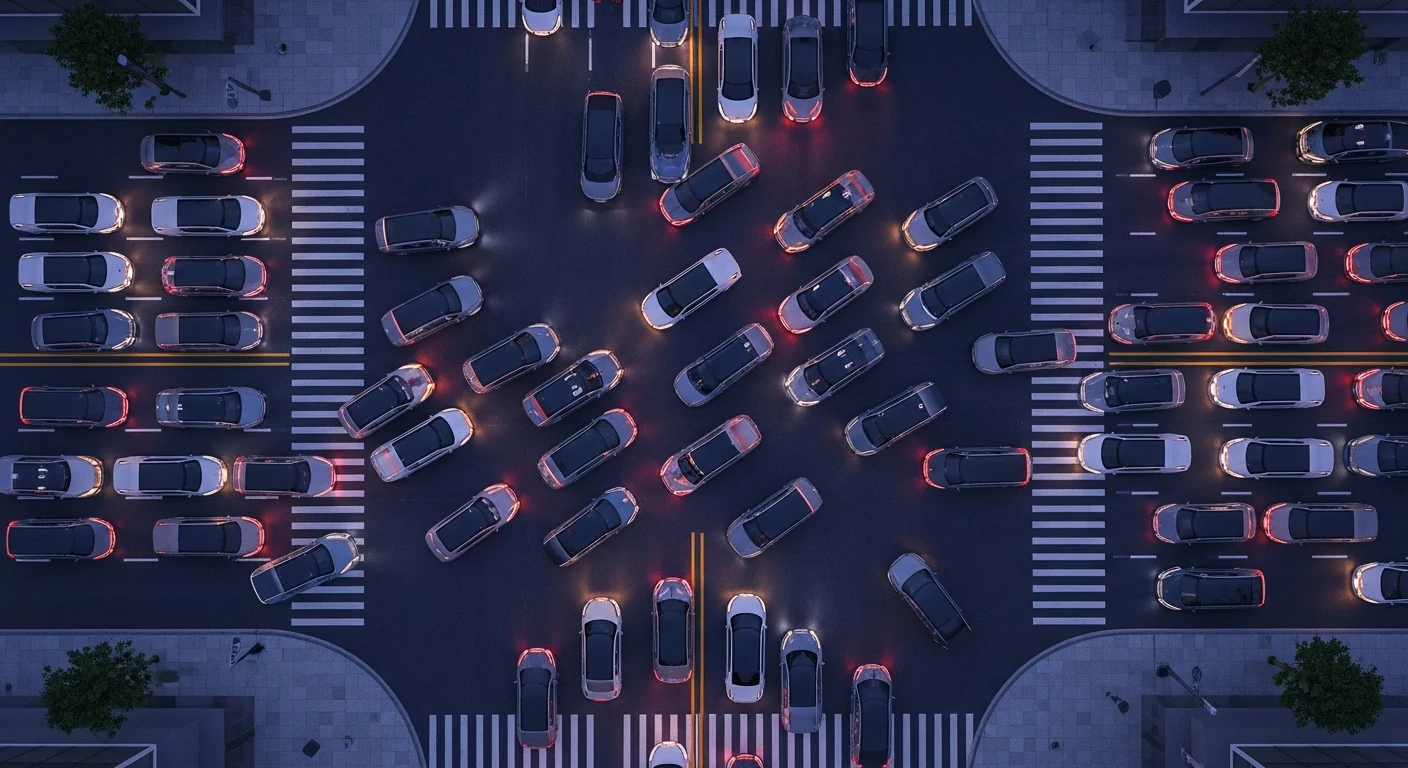
Over the past decade, investors have poured more than $100 billion into autonomous vehicle technology, driven by a compelling dual promise: robotaxis would not only eliminate human error on the roads but also cure the agonizing problem of urban traffic congestion. Today, as fleets of self-driving cars seamlessly navigate the streets of California, half of that futuristic vision is holding up remarkably well. The other half, however, is facing a stark reality check.
The commercial rollout of autonomous vehicles by companies like Waymo has proven that the technology can indeed make streets safer. Recent data confirms that these robotic vehicles are involved in significantly fewer crashes and generate much lower insurance claims compared to their human-driven counterparts. The leap from the early, clumsy DARPA Grand Challenges to a fully driverless commercial service is a monumental engineering triumph that has finally brought science fiction into our daily lives.
Yet, data submitted by Waymo to the California Public Utilities Commission (CPUC) reveals a surprising truth about urban mobility. When it comes to actually reducing traffic volume, robotaxis are currently performing no better than traditional ride-hailing services like Uber and Lyft.
Why hasn't this cutting-edge AI solved our daily gridlock? The answer lies in the simple geometry of city streets. While an artificial intelligence doesn't get distracted by a smartphone or cause "rubbernecking" delays, a robotaxi still occupies the exact same physical footprint as a standard car. When these vehicles circulate empty while waiting for their next passenger—a common industry practice known as "deadheading"—they add to the overall congestion just as human-driven ride-hailing cars do.
Furthermore, the very programming that makes robotaxis incredibly safe can occasionally turn them into unexpected roadblocks. When faced with unpredictable edge cases—such as a stopped school bus, heavily flooded roads, or confusing temporary construction zones—autonomous systems often default to extreme caution. Rather than smoothly, if slightly aggressively, navigating around an obstacle like a human driver might, an AI vehicle might simply freeze in place until the situation resolves, inadvertently backing up traffic for blocks.
This emerging data provides a crucial lesson in the limits of technological solutions to systemic infrastructure problems. Artificial intelligence can undoubtedly make our streets safer and fundamentally redefine how we experience our daily commute, but it cannot bend the laws of spatial physics. Solving urban gridlock will require more than just replacing human drivers with sophisticated algorithms; it demands a holistic approach that integrates these futuristic vehicles with robust public transit systems and smarter, forward-thinking city planning.
Key Points
- Over $100 billion has been invested in autonomous vehicle tech, bringing robotaxis from sci-fi to commercial reality.
- Robotaxis are proving safer than human drivers, boasting lower crash rates and insurance claims.
- CPUC data reveals that robotaxis do not reduce traffic congestion any better than traditional ride-hailing apps like Uber or Lyft.
- Empty vehicle circulation and overly cautious AI responses to edge cases (like flooded roads) continue to contribute to urban gridlock.
Why It Matters
This highlights that while AI can optimize safety and driving behavior, it cannot solve the geometric constraints of urban infrastructure, emphasizing the need for comprehensive city planning.
Sources:
- Autonomous vehicles were supposed to cut traffic—what if they don't? — Ars Technica AI
更多专栏

Your Next Coworker is a Blob That Orders Burritos
For decades, enterprise software has been synonymous with sterile dashboards, en...

The Midnight Bill: Why AI Agents Demand Hard Budget Caps
The dream of artificial intelligence is to have a tireless digital assistant wor...

Beyond Transformers: How Mamba is Rewriting the Rules of AI Memory
Think about how a human reads a sprawling, thousand-page fantasy series. You don...