The Invisible Loophole in AI Surveillance Promises
When a city installs new security cameras, public debate often centers on the manufacturer's privacy policies. If the company building the cameras publicly...
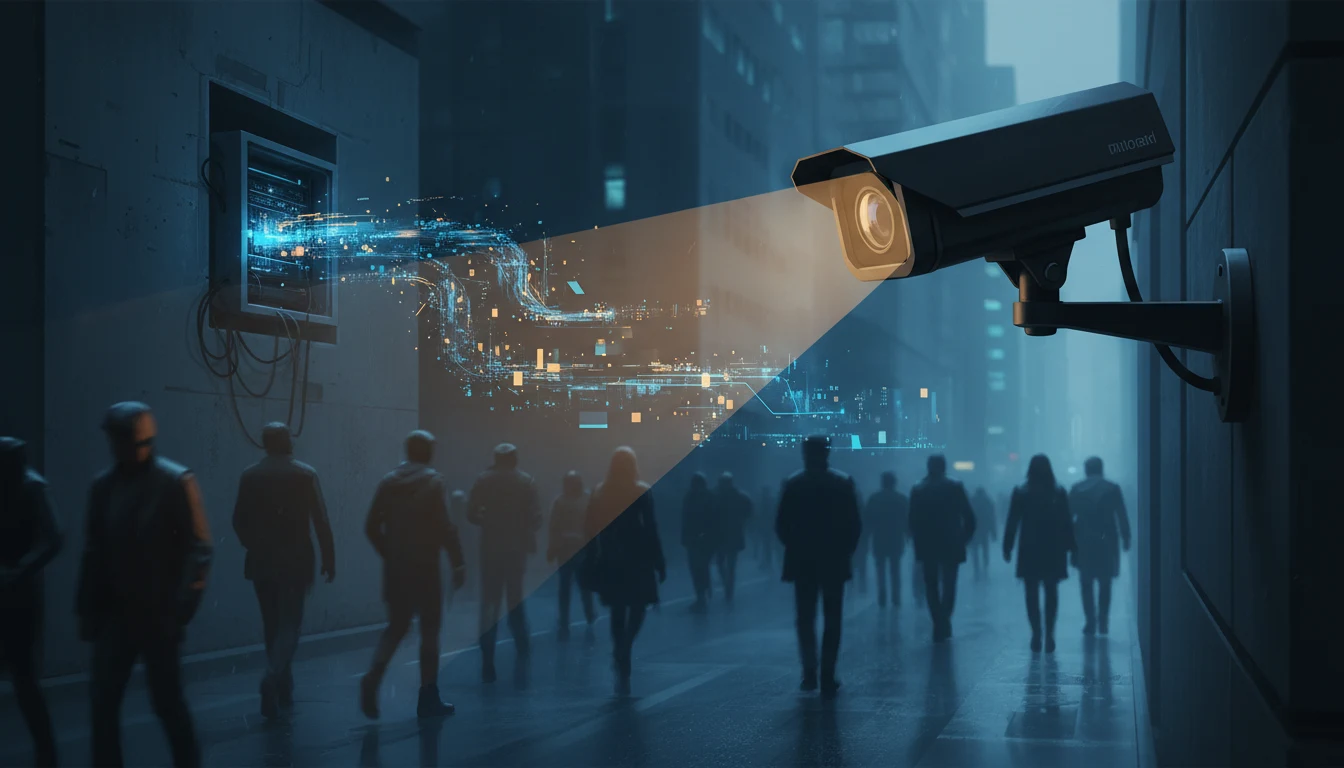
When a city installs new security cameras, public debate often centers on the manufacturer's privacy policies. If the company building the cameras publicly promises never to use facial recognition, citizens might reasonably feel their anonymity is protected. But the modular nature of modern artificial intelligence is exposing a critical loophole: hardware promises mean very little if third-party software can simply download the footage and analyze it anyway.
A recent development in the United States perfectly illustrates this blind spot in AI governance. Flock Safety, a prominent manufacturer of automatic license plate reading cameras, has been at the center of a national conversation about surveillance. To address privacy concerns, the company drew a hard line. "We will not add facial recognition to our devices," Flock's CEO recently stated.
However, the barrier erected by the hardware maker is being bypassed by downstream software vendors. VIDIZMO, a decades-old video analysis company, recently reached out to police departments—including one in Johnson City, Tennessee—with a compelling pitch. They offered a software hub designed to ingest footage from Flock’s cameras and cross-reference it with other sources like police body cameras. Once the video is inside VIDIZMO’s ecosystem, the company applies its own suite of AI tools, including facial recognition, behavior prediction, and demographic analysis.
According to the company's marketing materials, their artificial intelligence doesn't just match faces to a watchlist. It also claims the ability to categorize individuals by age, gender, and seven distinct racial groups—a practice that AI researchers have long criticized for being notoriously inaccurate and prone to bias.
What makes this situation particularly striking is the complete disconnect between the hardware and software layers. Flock was not informed of, nor involved in, VIDIZMO's integration plans. While VIDIZMO’s CEO admitted that the specific tool to automatically export Flock data hasn't been fully built yet, the company actively advertises the capability. He argued that facial recognition is simply "the way the world is going," suggesting that if camera makers won't provide the technology, third-party software will step in to fill the demand.
This dynamic fundamentally changes how we must think about AI privacy. It reveals that safeguarding public spaces is no longer just about restricting what a camera can do; it is about controlling where the data goes after it is recorded. An image that is completely anonymous when it leaves the camera lens can easily be transformed into a highly sensitive biometric profile by a separate AI model running on a remote server.
As artificial intelligence continues to integrate into civic infrastructure, the conversation must evolve. We can no longer rely solely on the ethical pledges of hardware manufacturers. Without comprehensive rules governing the downstream processing and third-party analysis of public data, any promise of privacy remains inherently fragile.
Key Points
- Camera maker Flock Safety explicitly refuses to implement facial recognition to protect public privacy.
- A third-party vendor, VIDIZMO, pitched police on exporting Flock data to run its own facial recognition and racial profiling AI.
- The disconnect between hardware data collection and downstream software analysis creates a major privacy loophole.
Why It Matters
It demonstrates that hardware-level privacy protections are insufficient if raw data can be exported and processed by unrestricted third-party AI software.
Sources:
更多专栏

The Digital Dead Drop: How AI Agents Could Spread 'Worms'
In the world of espionage, spies often use a "dead drop"—a secret, shared locati...

The AI Gadget You Build Yourself: Meta Opens the Door for Makers
The recent wave of dedicated AI hardware has largely been defined by sleek, expe...

Why the Creators of Resident Evil Are Teaming Up With AI
Modern blockbuster video games have a scaling problem. The virtual worlds we lov...