Amazon's Proteus Robot Now Takes Orders in Plain English
For decades, the primary barrier between humans and industrial machines was language. If you wanted a robot to move a heavy load, you had to speak its...
For decades, the primary barrier between humans and industrial machines was language. If you wanted a robot to move a heavy load, you had to speak its language—usually through specialized software, complex interfaces, or lines of code. Today, that dynamic is flipping. The machines are learning to speak ours.
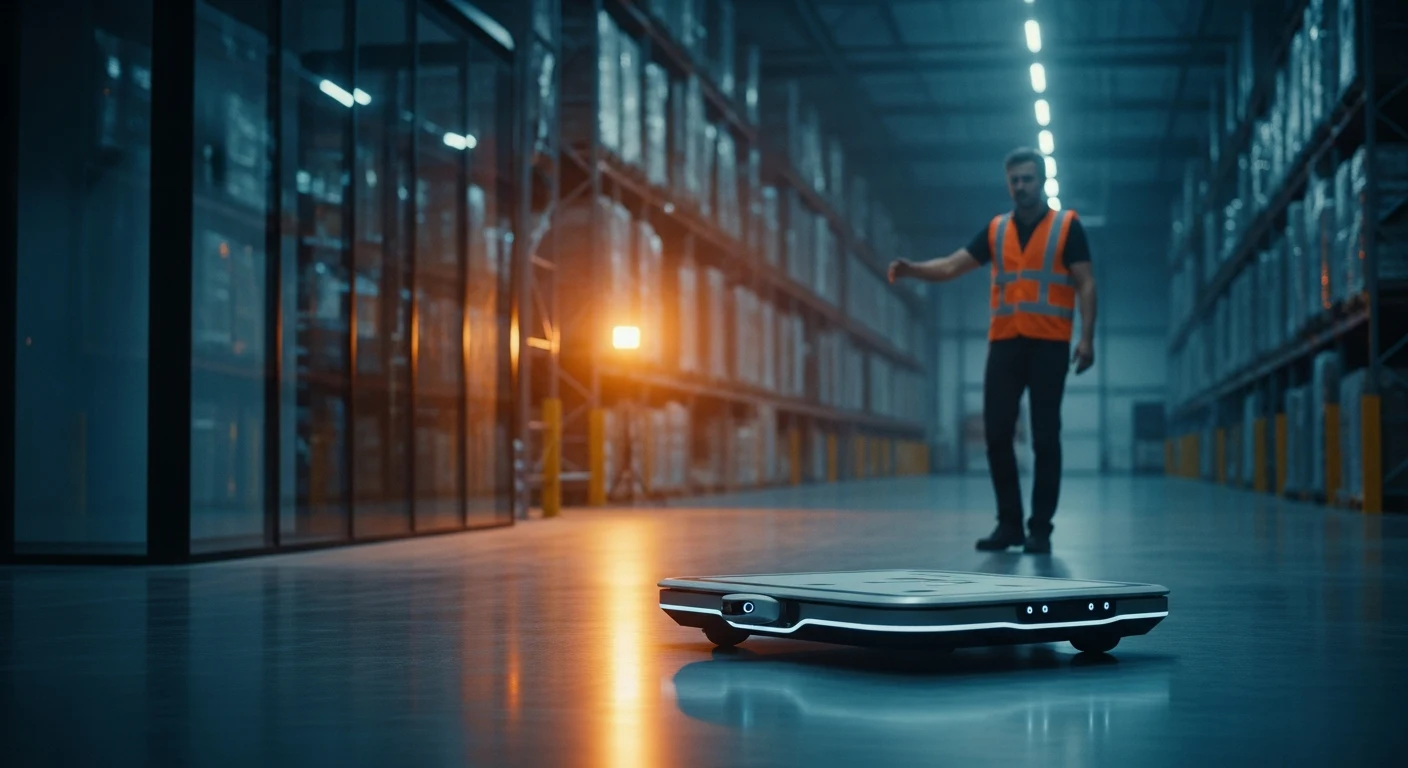
Amazon recently unveiled a major AI-powered upgrade to Proteus, its fully autonomous, floor-level warehouse robot. First introduced in 2022 as a tortoise-like machine designed to lift and transport heavy carts across massive fulfillment centers, Proteus is now capable of receiving instructions through natural language.
Instead of navigating a proprietary software interface to assign tasks, warehouse employees can now direct Proteus as if they were talking to a human colleague. You simply tell the machine what needs to be done. This shift from code-based commands to conversational prompts removes a significant technical bottleneck in fast-paced logistics environments. It effectively democratizes the control of advanced robotics, allowing workers without specialized technical training to interact seamlessly with autonomous systems on the warehouse floor.
But this leap in convenience carries profound implications for the future of labor. Amazon’s pivot toward natural language interfaces is part of a broader, aggressive push into warehouse automation. As robots like Proteus become easier to deploy, manage, and communicate with, the e-commerce giant's reliance on human labor for heavy, repetitive tasks will inevitably shift.
While the immediate corporate framing focuses on collaboration—robots taking over the literal heavy lifting so humans don't have to—the long-term reality points toward a structural transformation in employment. When a machine can understand plain English and execute tasks autonomously, the threshold for replacing human physical labor drops significantly. The question is no longer whether robots are capable of doing the job, but how the human workforce will adapt as machines become increasingly self-sufficient.
The evolution of Proteus offers a clear glimpse into the warehouse of tomorrow. It is a space where the friction between human intent and mechanical execution is nearly gone. As we celebrate the engineering marvel of a robot that listens, society must also prepare for the complex workforce transitions that will inevitably follow. The future of work will likely require humans to develop skills that go beyond what can simply be spoken into existence.
Key Points
- Amazon has upgraded its autonomous warehouse robot, Proteus, with AI to understand natural language.
- Workers can now assign tasks to the robot as easily as speaking to a human colleague, bypassing complex software.
- The tortoise-like robot, first announced in 2022, is designed to move heavy carts across warehouse floors.
- This user-friendly upgrade is part of Amazon's broader strategy to increase automation, raising concerns about human job displacement.
Why It Matters
By removing the technical barriers to operating advanced robotics, Amazon is accelerating the integration of AI into physical workspaces. This shift highlights both the incredible potential for workplace efficiency and the pressing need to address the impact of automation on blue-collar jobs.
Sources:
- Amazon develops a warehouse robot that workers can speak to — The Verge - AI
更多专栏

Your Next Coworker is a Blob That Orders Burritos
For decades, enterprise software has been synonymous with sterile dashboards, en...

The Midnight Bill: Why AI Agents Demand Hard Budget Caps
The dream of artificial intelligence is to have a tireless digital assistant wor...

Beyond Transformers: How Mamba is Rewriting the Rules of AI Memory
Think about how a human reads a sprawling, thousand-page fantasy series. You don...