The 'Deep Blue' Era of Coding
What happens when the tools we use to build the digital world suddenly become better builders than we are? In a recent thought experiment, prominent developer...
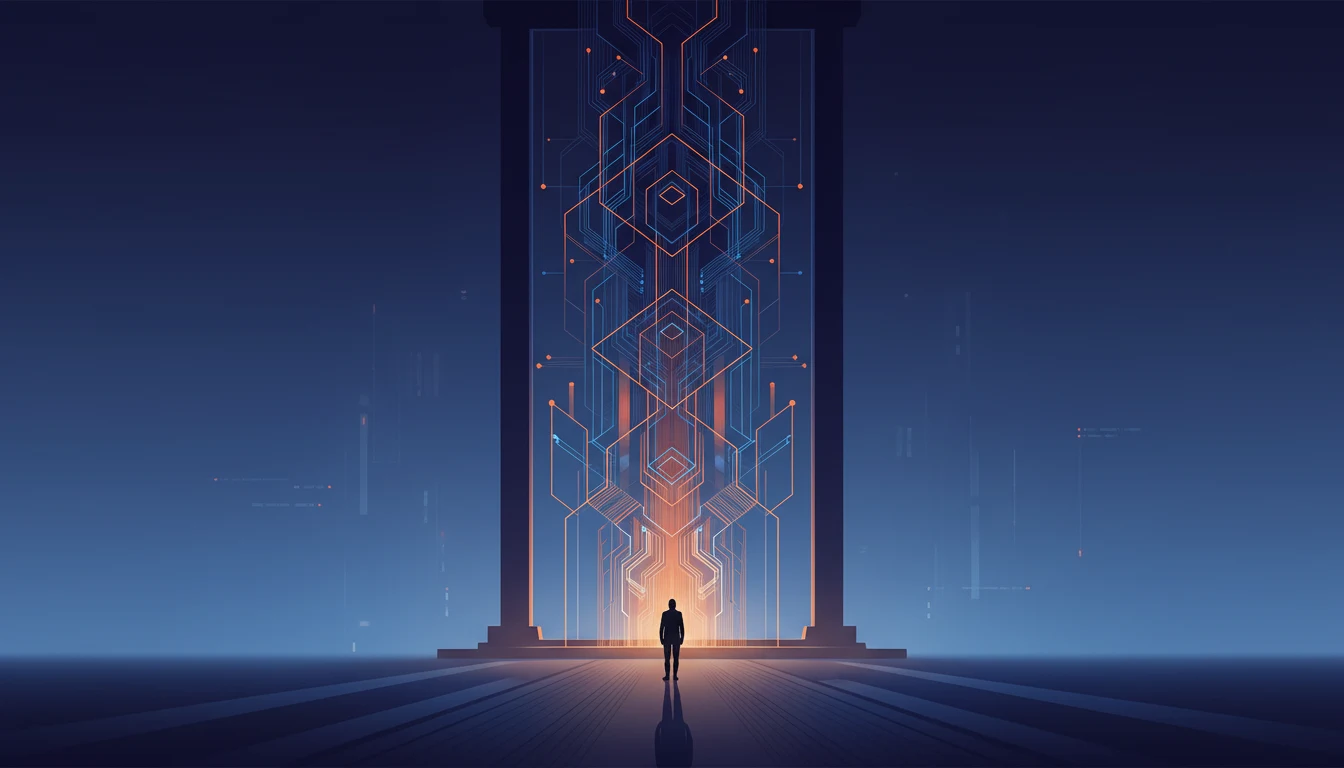
What happens when the tools we use to build the digital world suddenly become better builders than we are?
In a recent thought experiment, prominent developer Simon Willison painted a vivid picture of what the tech landscape might look like in a speculative 2026. The core of his forecast hinges on an invisible threshold: the moment AI coding agents evolve from being "buggy novelties that often make mistakes" to "reliable co-workers for day-to-day use."
According to this futuristic scenario, hypothetical models like Claude Opus 4.5 and GPT-5.1 will eventually unlock a new paradigm of productivity. But the most fascinating part of this prediction isn't the software itself—it's how human beings will react to it.
Once the friction of coding is removed, Willison suggests developers will enter an era of unprecedented ambition. The mindset shifts from "What can I realistically build?" to "Let's see what these agents can do." However, this newfound power comes with bizarre psychological side effects.
One is a phenomenon coined as "AI mania." It’s the creeping anxiety that if your AI agents aren't actively building something for you right this second, you are wasting valuable time. This mania can lead to sleepless nights and the creation of absurdly over-ambitious, yet entirely useless projects—like building a slow JavaScript interpreter entirely in Python, just to see if the AI can pull it off.
On the opposite end of the spectrum lies a profound sense of existential dread, dubbed the "Deep Blue" effect. Named after the chess computer that famously defeated Garry Kasparov, this term captures the AI-induced ennui that strikes software engineers when they realize the machine can do almost anything. It is a profound listlessness, a sudden loss of professional identity in a landscape where everything changes at breakneck speed.
Interestingly, even in this imagined future, AI isn't flawless. It might write perfect code, but it still struggles with absurd, logic-defying prompts—like generating an image of a pelican riding a bicycle.
As we inch closer to this reality, the bottleneck of innovation is fundamentally shifting. The hardest part of our jobs will no longer be figuring out how to build something, but rather deciding what is actually worth building in the first place.
Key Points
- Future AI models are predicted to turn coding agents into highly reliable daily tools.
- 'AI mania' may drive users to obsessively keep their AI agents working, leading to burnout and pointless projects.
- The 'Deep Blue' effect highlights the existential dread and listlessness engineers may feel as AI masters their craft.
- Even advanced AI continues to struggle with tasks that defy real-world logic or physical constraints.
Why It Matters
As AI transitions from a helpful assistant to an autonomous creator, understanding the psychological impacts—like hyper-productivity and existential burnout—will be crucial for navigating the future of work.
Sources:
- 2026 in LLMs (so far) — Simon Willison's Weblog
更多专栏
The Digital Dead Drop: How AI Agents Could Spread 'Worms'
In the world of espionage, spies often use a "dead drop"—a secret, shared locati...
The AI Gadget You Build Yourself: Meta Opens the Door for Makers
The recent wave of dedicated AI hardware has largely been defined by sleek, expe...
Why the Creators of Resident Evil Are Teaming Up With AI
Modern blockbuster video games have a scaling problem. The virtual worlds we lov...