The Uncanny Valley of AI Cuisine
Imagine scrolling through a local café's social media feed and spotting a picture of an ice cream cone. But on closer inspection, it looks less like a sweet...
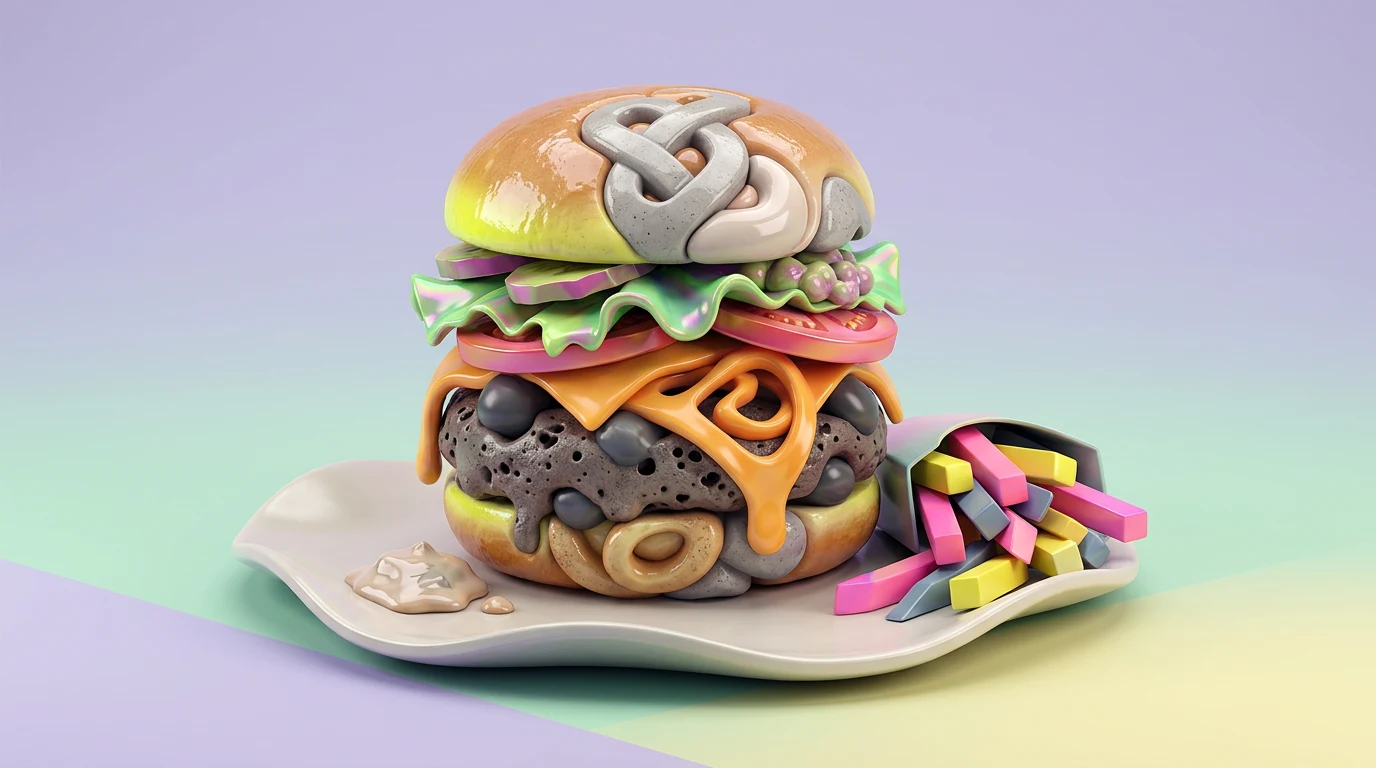
Imagine scrolling through a local café's social media feed and spotting a picture of an ice cream cone. But on closer inspection, it looks less like a sweet treat and more like a scoop of construction masonry—or worse, a human brain. Welcome to the era of AI-generated menus, where artificial intelligence is inadvertently serving up a buffet of visual horrors.
As more restaurants, cafes, and food brands turn to generative AI to cut the costs of professional photography, the internet is becoming littered with unappetizing, bizarre imagery. The results often defy culinary logic. We are seeing donut-shaped shrimp, worm-like noodles, stringy chicken, and monstrous burgers that look like they belong in a sci-fi horror film rather than on a dining table. One particularly egregious example includes a trypophobic burrito filled with grub-like textures and unsettling holes.
Why does AI struggle so much with something as universal as food? The culprit lies in how current image generators, specifically "diffusion models," actually operate. These systems don't have a conceptual understanding of what food is, how it tastes, or how gravity affects a melting slice of cheddar. Instead, they predict pixel patterns based on vast, noisy datasets. They know that a pastry and a bowl of noodles both feature curved, overlapping lines, which frequently leads to bizarre mashups like noodle-like pastries.
Furthermore, organic textures are notoriously difficult for AI to render accurately. The subtle sheen of a glazed donut, the specific crumb structure of freshly baked bread, or the exact moisture level of cooked meat requires a precise understanding of physical reality. When diffusion models guess wrong, they compensate by adding random lumps, stringy artifacts, and excessive holes.
This structural failure hits on a deeply ingrained human instinct. We are biologically hardwired to reject food that looks diseased, infested, or rotten. When an AI generates a burrito with unnatural clusters of holes or a sandwich with wormy textures, it triggers our natural disgust responses. The AI isn't trying to be gross; it just doesn't know the difference between a delicious sesame seed and a parasitic grub.
While generative AI might be perfectly capable of dreaming up fantastical landscapes or sleek digital art, the dinner plate remains a formidable challenge. Food is profoundly sensory and rooted in the physical world. Until algorithms can understand the physical properties of what makes a meal genuinely appetizing, human food photographers can rest easy. For now, AI's attempt at cooking is best left off the menu.
Key Points
- Food brands are increasingly using AI for promotional images, often resulting in bizarre, unappetizing 'slop'.
- Common visual errors include donut-shaped shrimp, masonry-like ice cream, and trypophobic holes in food.
- Diffusion models generate images based on pixel patterns, lacking an understanding of food's actual physical properties.
- The unnatural lumps and holes generated by AI often trigger biological disgust responses in humans.
Why It Matters
The bizarre nature of AI-generated food highlights a critical limitation in current generative models: their inability to comprehend the physical reality and structural logic of the everyday objects they depict.
Sources:
- Why AI food looks like that — The Verge - AI
更多专栏

Your Next Coworker is a Blob That Orders Burritos
For decades, enterprise software has been synonymous with sterile dashboards, en...

The Midnight Bill: Why AI Agents Demand Hard Budget Caps
The dream of artificial intelligence is to have a tireless digital assistant wor...

Beyond Transformers: How Mamba is Rewriting the Rules of AI Memory
Think about how a human reads a sprawling, thousand-page fantasy series. You don...