The AI Music Heist Happening on Spotify
The digital music industry is built on a massive, invisible plumbing system of third-party distributors that pipe songs from artists' laptops directly into...
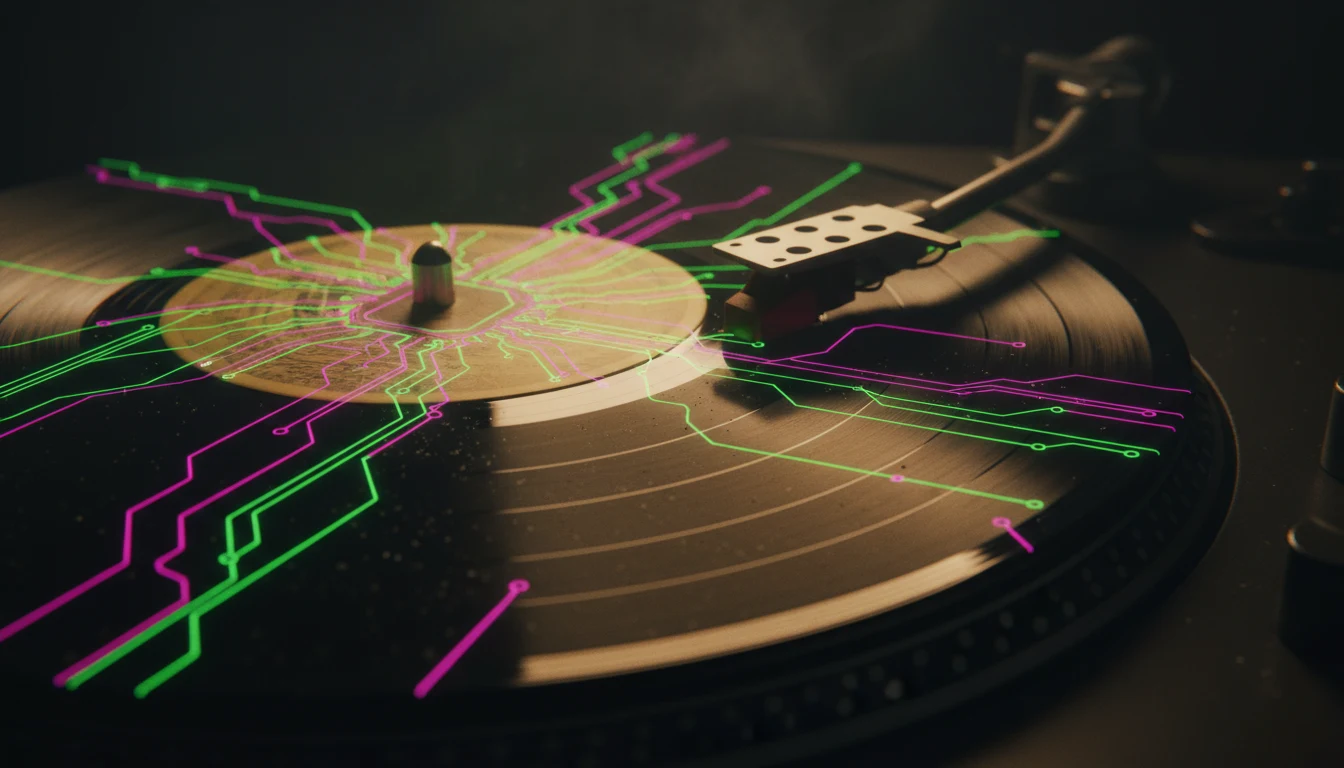
The digital music industry is built on a massive, invisible plumbing system of third-party distributors that pipe songs from artists' laptops directly into your Spotify or Apple Music playlists. For years, this system operated on a fragile honor code. Now, generative AI has turned a long-standing vulnerability in that plumbing into a lucrative opportunity for scammers.
To understand how easily this trust can be broken, consider the recent case of the Brooklyn-based punk band Lathe of Heaven. On September 10, a new track titled "Riding High" appeared on the band's verified streaming profiles. The vocals didn't match the lead singer, and the album art was completely off-brand. The band hadn't pivoted to a new sound; they had been digitally hijacked.
The track was actually created by a journalist using the AI music generator Udio. By exploiting a known loophole in how third-party digital music distributors interact with streaming giants like Spotify, Tidal, and Amazon Music, the journalist bypassed all security checks. With just a simple text prompt and a few clicks, a completely artificial track was successfully embedded into a real, verified artist's official discography.
While this experiment was conducted to highlight a critical flaw, actual scammers are already weaponizing this exact method at scale. The economic incentive is straightforward: streaming royalties. By generating hundreds of AI tracks and quietly slipping them onto the profiles of established artists, bad actors can piggyback on existing fanbases. When a loyal fan clicks on a new release notification expecting their favorite artist, the scammer collects the fractional pennies generated by that stream. Multiply this by thousands of artists and millions of streams, and the financial drain becomes significant.
What makes this particularly concerning is the sheer volume of synthetic audio that can now be produced. Before tools like Udio or Suno, creating a fake song required musical talent, studio time, and effort. Today, the friction of creation is essentially zero. Scammers can flood the zone, overwhelming the already lax moderation systems of digital distributors.
Currently, neither the streaming platforms nor the distribution services are taking definitive responsibility for closing this loophole, leaving artists to manually police their own pages for digital parasites.
For everyday listeners, this shift fundamentally alters the relationship we have with our digital libraries. The blue verification checkmark next to an artist's name is no longer a guarantee of authenticity. As AI generation tools become increasingly integrated into our media landscape, the platforms that host our content will need to build entirely new architectures of trust, or risk drowning in a sea of synthetic noise.
Key Points
- A journalist successfully uploaded an AI-generated song to a real punk band's verified Spotify page.
- The exploit relies on a vulnerability in how third-party distributors push music to streaming services.
- Scammers use this loophole to siphon royalty payments from fans who mistakenly stream the fake AI tracks.
- The ease of AI music creation has turned a minor platform flaw into a scalable fraud operation.
Why It Matters
As AI lowers the barrier to content creation, existing platform vulnerabilities are being weaponized, eroding consumer trust and financially harming real artists.
Sources:
更多专栏

Your Next Coworker is a Blob That Orders Burritos
For decades, enterprise software has been synonymous with sterile dashboards, en...

The Midnight Bill: Why AI Agents Demand Hard Budget Caps
The dream of artificial intelligence is to have a tireless digital assistant wor...

Beyond Transformers: How Mamba is Rewriting the Rules of AI Memory
Think about how a human reads a sprawling, thousand-page fantasy series. You don...