Why Supervillains Are Protesting AI Surveillance
Local city council meetings are usually mundane affairs, filled with zoning debates and budget reviews. But recently, a new demographic has been taking the...
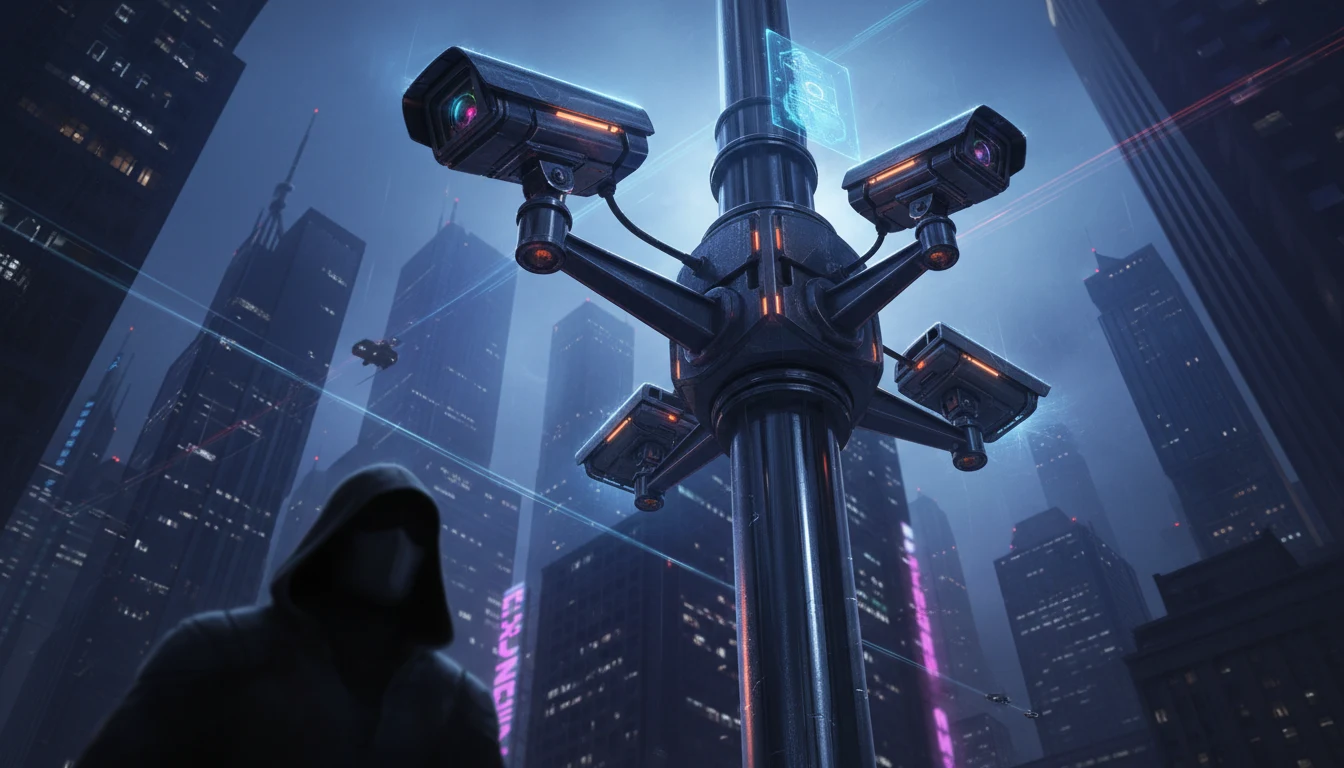
Local city council meetings are usually mundane affairs, filled with zoning debates and budget reviews. But recently, a new demographic has been taking the podium: supervillains.
In Seattle, Marvel’s "Doctor Doom" recently stepped up to the microphone to formally thank the city for building him a sprawling, inescapable surveillance empire. Weeks earlier in San Diego, Star Wars antagonist Darth Vader made a similar appearance to praise the local government’s adoption of tracking cameras.
Beneath the silver masks and heavy black helmets are everyday citizens and privacy activists. Clifford Cawthon, the man who brought Doctor Doom to Seattle’s Public Safety Committee, used the theatrical stunt to spotlight a very real and rapidly expanding technology: the AI-driven Real-Time Crime Center (RTCC).
The modern urban surveillance apparatus has evolved far beyond isolated security cameras recording onto dusty hard drives. Today’s systems, built by tech companies like Axon and Flock, act as centralized intelligence hubs. Seattle’s RTCC ingests data from a vast array of sources, including city-wide CCTV, police body-worn cameras, geolocation data, and Automatic License Plate Recognition (ALPR) systems. When Cawthon visited the facility, he noted that it closely resembled a villain’s high-tech lair—complete with a massive wall of screens capable of pulling up live feeds from across the city, accessible even via remote login.
While proponents argue these systems are vital for modern public safety, privacy advocates warn that stitching together so much data creates an unprecedented dragnet. The core issue isn't just the cameras themselves, but the artificial intelligence and software that aggregate and analyze our movements. Cawthon’s satirical speech highlighted grim, real-world concerns: the potential for surveillance tools to track immigrants, monitor individuals seeking reproductive or gender-affirming medical care, or enable rogue employees to stalk their ex-partners. Furthermore, the lack of robust digital guardrails means this data is frequently shared with federal agencies like ICE or the military.
These pop-culture protests are born out of frustration. Traditional petitions and speeches often fail to capture public attention when it comes to abstract concepts like data privacy and algorithmic tracking. By adopting the personas of fictional tyrants, activists are making a visceral point: if a comic book villain would love this technology, should a democratic society really be deploying it?
As artificial intelligence continues to lower the cost of mass surveillance, cities are quietly being transformed into digital panopticons. The theatrical appearances of Doctor Doom and Darth Vader serve as a humorous but urgent wake-up call. They force us to ask a critical question: in the pursuit of absolute security, are we building the very infrastructure that compromises our fundamental freedoms?
Key Points
- Activists are dressing as pop-culture villains to protest the expansion of AI-driven surveillance in US cities.
- Modern Real-Time Crime Centers aggregate data from CCTV, body cams, and automated license plate readers.
- Privacy advocates warn that centralized AI surveillance can lead to data abuse, tracking of vulnerable groups, and unauthorized sharing with federal agencies.
- The satirical protests aim to make the abstract risks of data tracking more tangible to the general public.
Why It Matters
As AI makes it cheaper and easier to track citizens in real-time, understanding the capabilities of urban surveillance systems is crucial for protecting civil liberties and ensuring technological accountability.
Sources:
更多专栏

Your Next Coworker is a Blob That Orders Burritos
For decades, enterprise software has been synonymous with sterile dashboards, en...

The Midnight Bill: Why AI Agents Demand Hard Budget Caps
The dream of artificial intelligence is to have a tireless digital assistant wor...

Beyond Transformers: How Mamba is Rewriting the Rules of AI Memory
Think about how a human reads a sprawling, thousand-page fantasy series. You don...