The Wizard of Oz in Silicon Valley: When AI is Actually Just Humans
Silicon Valley has a long-standing tradition of "faking it until you make it." When a new technology isn't quite ready to handle the messy reality of the...
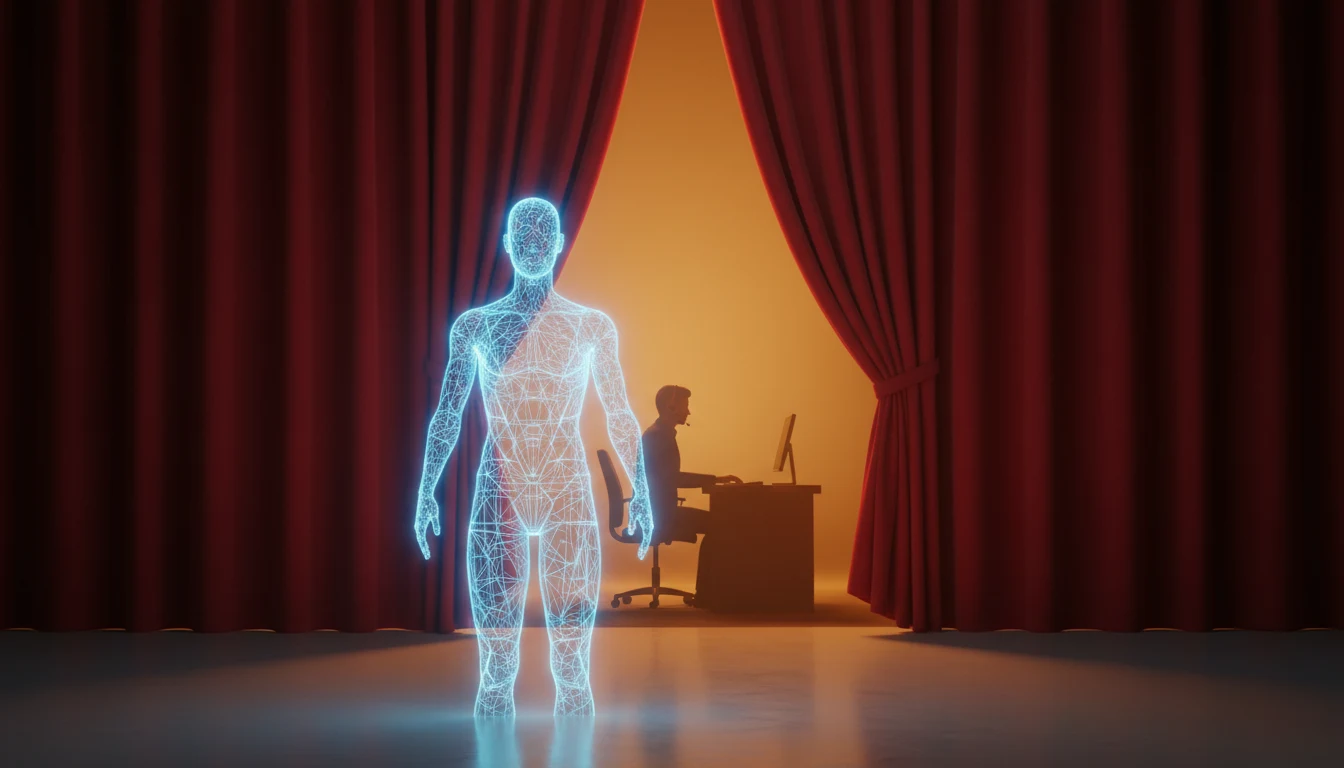
Silicon Valley has a long-standing tradition of "faking it until you make it." When a new technology isn't quite ready to handle the messy reality of the physical world, tech companies often quietly employ human workers to bridge the gap. The latest frontier for this strategy is artificial intelligence, and a recent internal controversy at Meta highlights exactly why this approach is becoming increasingly problematic.
Recently, Meta executives touted an impressive new capability for its AI agent, Muse: the ability to make outbound phone calls on behalf of users. Whether it's booking a haircut or navigating a frustrating customer service phone tree, the AI was pitched as your personal digital concierge. However, leaked internal documents obtained by 404 Media reveal a different reality. Meta has integrated a "human agent layer" into the system. In many cases, it isn't a sophisticated neural network dialing the phone—it's a human being sitting in a call center.
The revelation has sparked significant unease among Meta's own workforce. On internal message boards, employees raised red flags about the profound privacy implications of this setup. The core issue lies in user expectation. When a person interacts with an AI, they generally assume their conversation is private, processed only by code. This false sense of security might encourage someone to ask the AI to schedule a sensitive medical appointment or resolve a private financial matter. Passing that intimate data to human contractors—even trained ones—fundamentally breaches that unspoken trust.
One employee noted that during internal testing, users were only informed that a human had made the call after the fact, leading to obvious discomfort regarding the information they had shared. Others warned that launching the feature without explicit upfront disclosures would inevitably lead to a public relations disaster, framing the company as relying on cheap human labor because its AI simply wasn't good enough.
For its part, Meta insists that Muse is strictly a pre-launch, confidential product currently in its "dogfooding" (internal testing) phase. A company spokesperson stated that the entire purpose of this phase is to gather feedback, implement necessary safety protections, and ensure that proper disclosures are in place before any public rollout.
Regardless of Meta's future safeguards, the Muse controversy serves as a crucial reality check for the AI industry. It demonstrates that while large language models are incredibly adept at generating text in a chat window, interacting with the unpredictable, analog world of human phone calls remains a massive technical hurdle. Until machines can genuinely navigate the nuances of a live conversation, consumers should remember that the "magic" of AI might just be another human being working behind a digital curtain.
Key Points
- Meta's Muse AI agent uses human call center workers to complete outbound phone calls during its testing phase.
- Internal documents show Meta employees are highly concerned about the privacy risks of sharing sensitive user requests with human contractors.
- Users interacting with AI often assume strict privacy, making the undisclosed presence of human workers a significant ethical issue.
- Meta defends the practice as standard internal testing designed to refine the product and implement safety disclosures before a public launch.
Why It Matters
The gap between AI marketing and reality often obscures the reliance on human labor, raising critical questions about user privacy and the true capabilities of modern automation.
Sources:
更多专栏

Your Next Coworker is a Blob That Orders Burritos
For decades, enterprise software has been synonymous with sterile dashboards, en...

The Midnight Bill: Why AI Agents Demand Hard Budget Caps
The dream of artificial intelligence is to have a tireless digital assistant wor...

Beyond Transformers: How Mamba is Rewriting the Rules of AI Memory
Think about how a human reads a sprawling, thousand-page fantasy series. You don...