The Robots Maintaining the AI Revolution
Behind every invisible cloud and artificial intelligence model lies a massive, humming physical reality: the data center. For years, keeping these colossal...
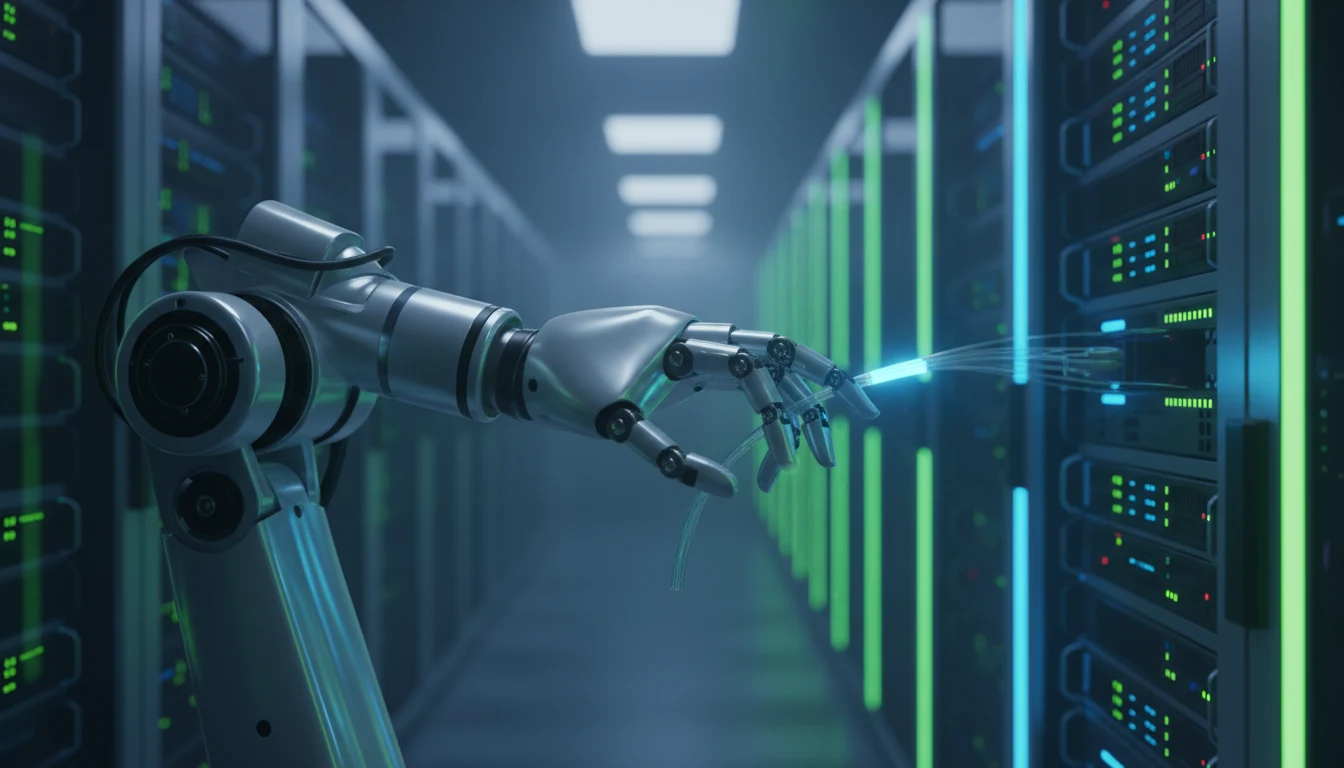
Behind every invisible cloud and artificial intelligence model lies a massive, humming physical reality: the data center. For years, keeping these colossal server farms running required an army of human technicians walking miles of aisles to swap out dead cables and reboot frozen servers. The physical dexterity required for these tasks was long considered a reliable moat against automation. Now, however, the companies building the future of AI are looking to automate the very facilities that make AI possible.
Meta is currently conducting unannounced tests to integrate robotic workers into its rapidly expanding data centers. Partnering with hardware manufacturers like ABB, Watney Robotics, and Kinova, the tech giant is experimenting with machines capable of performing hands-on maintenance. One specific trial involves using Kinova’s Gen3 robotic arm to physically power-cycle servers—a routine but essential task. Another project focuses on testing a robot designed specifically to swap out networking cables.
The driving force behind this initiative is the staggering cost of the AI boom. As Meta and its peers pour billions into new infrastructure to train increasingly complex models, operational expenses are skyrocketing. Deploying robots offers a potential pathway to manage this rapidly growing physical footprint without proportionally increasing human headcount, keeping long-term labor costs in check.
However, the arrival of mechanical arms in server aisles is shifting the narrative around job security. While much of the recent anxiety regarding AI has centered on knowledge workers and creative professionals, the technicians maintaining the hardware are now feeling the pressure. One worker familiar with Meta’s trials estimated that a successful cable-swapping robot could eliminate up to 80 percent of the workload for certain roles. The sentiment on the floor is shifting from a sense of security in physical labor to a stark realization that automation is coming for the server racks, too.
The irony of this development is palpable: the massive infrastructure built to automate cognitive tasks is now accelerating the automation of physical labor. As data centers become increasingly autonomous, it challenges the comforting assumption that hands-on jobs are immune to the tech revolution. The future of the internet might not just be designed by AI, but physically maintained by robots.
Key Points
- Meta is experimenting with robots from vendors like Kinova and ABB to perform physical maintenance in data centers.
- Tasks being automated include power-cycling servers and swapping networking cables.
- The shift aims to offset the massive operational costs of expanding AI infrastructure.
- Data center workers express concern over job security as physical tasks face automation.
Why It Matters
It highlights a critical shift: the massive physical infrastructure required to power AI is increasingly being maintained by machines, threatening jobs previously thought safe from automation.
Sources:
- Inside Meta’s push to put robots to work in data centers — Ars Technica AI
更多专栏

Your Next Coworker is a Blob That Orders Burritos
For decades, enterprise software has been synonymous with sterile dashboards, en...

The Midnight Bill: Why AI Agents Demand Hard Budget Caps
The dream of artificial intelligence is to have a tireless digital assistant wor...

Beyond Transformers: How Mamba is Rewriting the Rules of AI Memory
Think about how a human reads a sprawling, thousand-page fantasy series. You don...