The Fatal Blind Spots of the AI Virtual Wall
In the harsh, unforgiving expanse of the New Mexico desert, a cluster of advanced surveillance towers stands watch. Equipped with AI-driven algorithms, they...
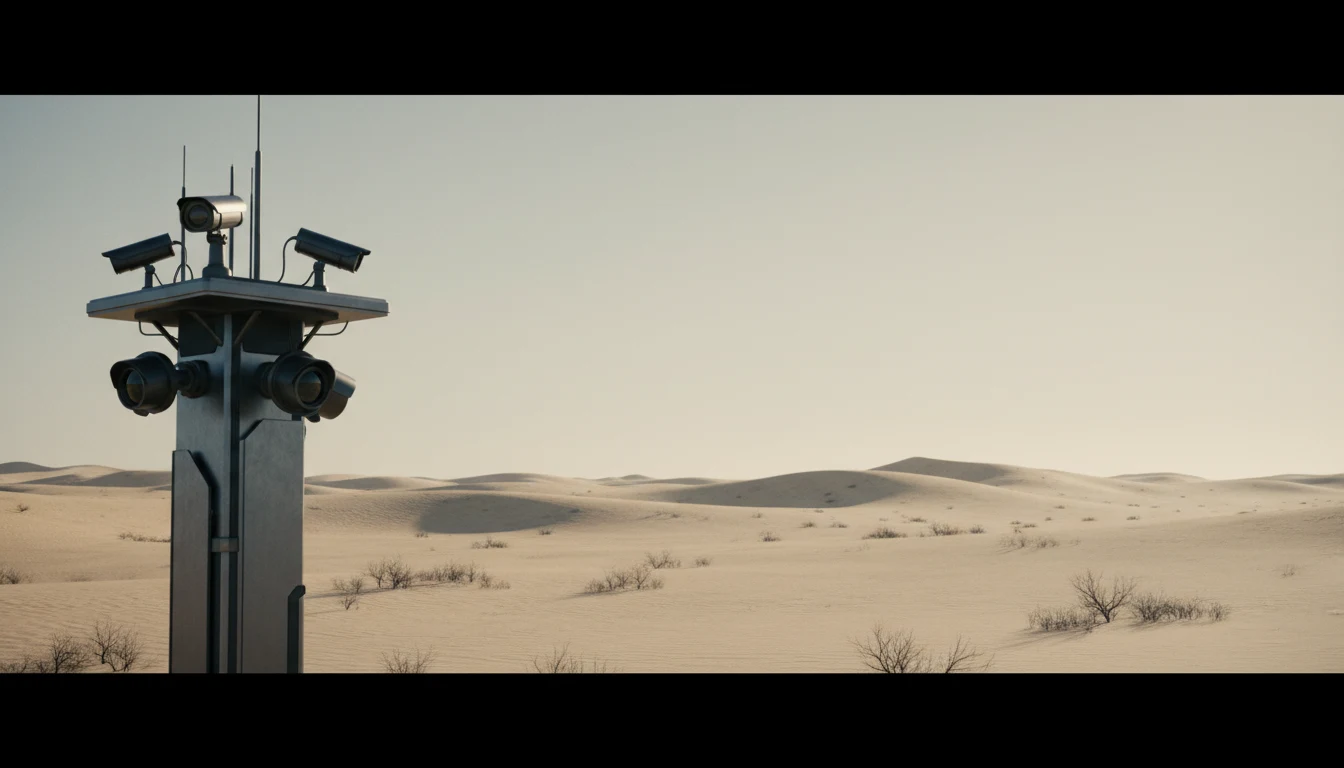
In the harsh, unforgiving expanse of the New Mexico desert, a cluster of advanced surveillance towers stands watch. Equipped with AI-driven algorithms, they are designed to detect human movement across the US-Mexico border with pinpoint accuracy. Yet, in 2024 alone, more than 18 people died in just one small stretch of this surveilled land. Often, their bodies lay unnoticed for months under the unblinking eyes of these high-tech cameras.
A comprehensive investigation by MIT Technology Review and Times of San Diego has highlighted a systemic failure in the US government’s much-touted "virtual wall." Across the borderlands, journalists identified over 1,050 deaths near these surveillance towers. The investigation revealed that the failures of this AI network are multi-layered: hardware breaks down in the harsh environment, algorithms inexplicably fail to distinguish humans from the landscape, and, perhaps most critically, human border agents frequently ignore automated alerts.
Despite these glaring blind spots, the technology's footprint is expanding at a rapid pace. The US government plans to inject $1 billion to triple the size of this virtual wall by 2034, heavily relying on defense contractors like Anduril. Yet, a fundamental question remains unanswered: is the technology actually working as intended, and who is holding it accountable?
The core issue lies in a profound lack of auditing and data tracking. US Customs and Border Protection (CBP) does not even publish a comprehensive map of its active towers. To understand the scope of the problem, researchers had to rely on mapping data from the Electronic Frontier Foundation and satellite imagery just to locate nearly 600 of these installations.
Furthermore, the Government Accountability Office (GAO) has repeatedly flagged that CBP’s internal tracking systems are deeply flawed. Since 2014, the GAO has urged border agencies to properly log when surveillance tech leads to apprehensions to measure its effectiveness, but subsequent reviews found the collected data to be highly inaccurate. Similarly, programs designed to track and prevent deaths, such as the Missing Migrant Program launched in 2017, lack the necessary metrics to measure whether they are actually reducing fatalities.
The situation at the border serves as a stark warning for the deployment of artificial intelligence in public safety. Installing advanced sensors and algorithms is only the first step. Without rigorous independent audits, transparent data collection, and a reliable human response protocol, AI surveillance systems risk becoming expensive monuments to systemic negligence rather than effective tools for security and humanitarian protection.
Key Points
- Over 1,050 deaths have occurred near AI-enabled surveillance towers along the US-Mexico border.
- The "virtual wall" suffers from broken hardware, algorithmic misses, and ignored alerts by human agents.
- Despite a lack of effectiveness audits, the US plans a $1 billion expansion of the network by 2034.
- Government watchdogs have repeatedly found that data tracking for both migrant deaths and tech-assisted apprehensions is highly inaccurate.
Why It Matters
This highlights the danger of deploying AI in high-stakes environments without rigorous oversight, showing that technology alone cannot solve complex security challenges without proper human accountability.
Sources:
- 4 ways to address the failures we found along the US border’s “virtual wall” — MIT Technology Review - AI
更多专栏

Your Next Coworker is a Blob That Orders Burritos
For decades, enterprise software has been synonymous with sterile dashboards, en...

The Midnight Bill: Why AI Agents Demand Hard Budget Caps
The dream of artificial intelligence is to have a tireless digital assistant wor...

Beyond Transformers: How Mamba is Rewriting the Rules of AI Memory
Think about how a human reads a sprawling, thousand-page fantasy series. You don...