The Physical Cost of Compute: When an AI Data Center Meets Suburban Pushback
The artificial intelligence boom is often discussed in abstract terms—cloud computing, neural networks, and algorithmic breakthroughs. But the reality of AI is...
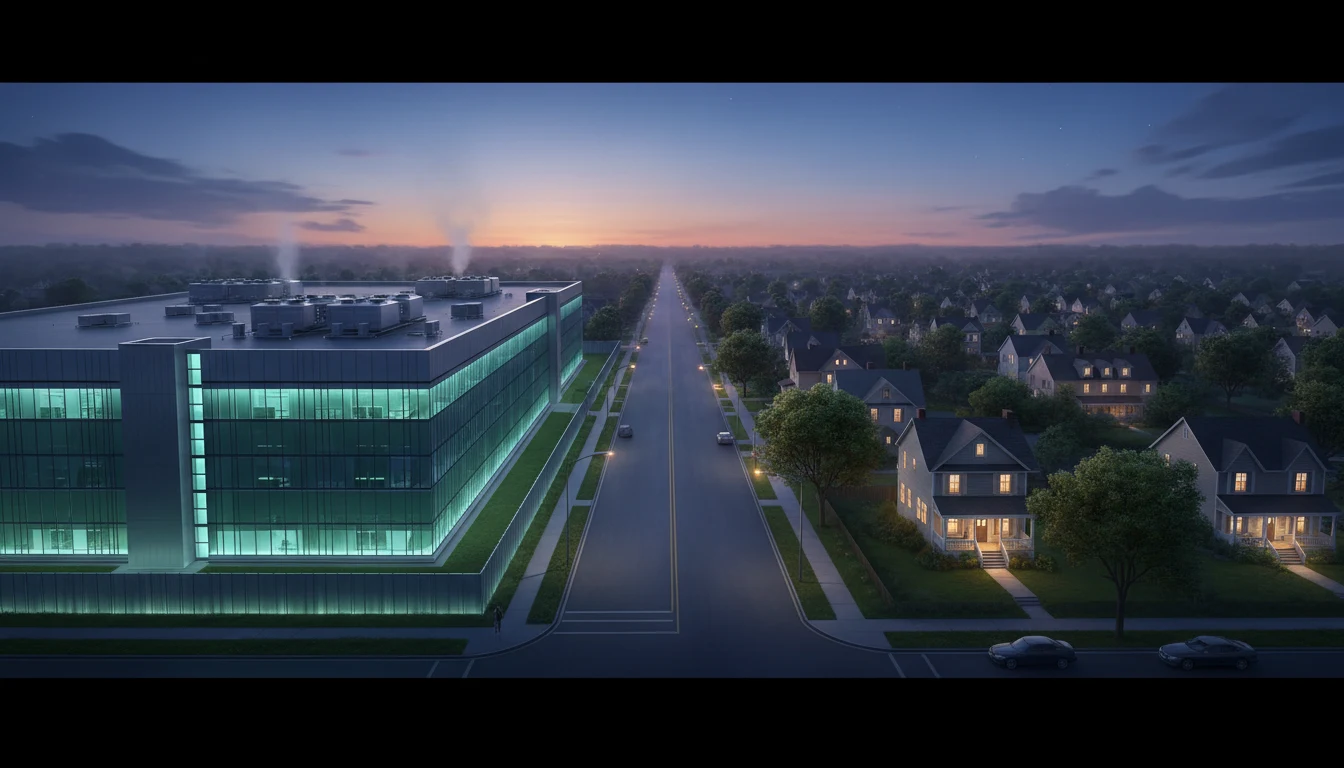
The artificial intelligence boom is often discussed in abstract terms—cloud computing, neural networks, and algorithmic breakthroughs. But the reality of AI is deeply physical. It requires land, massive amounts of water, and relentless electricity. For the residents of Ypsilanti Township, Michigan, the physical footprint of advanced computing has suddenly become a very local, and very contentious, issue.
The University of Michigan, in partnership with Los Alamos National Laboratories (LANL), recently proposed building a $1.2 billion, 220,000-square-foot hyperscale data center in the township. To address mounting community concerns, the university hosted a town hall meeting. Instead of quelling fears, the event highlighted a growing disconnect between the ambitions of high-tech scientific research and the everyday realities of local communities.
During the meeting, university representatives attempted to frame the project not as a typical commercial data center, but as a noble "scientific computing center." They highlighted its potential to accelerate drug discovery, optimize the power grid, and improve cancer care. To contextualize its footprint, the project's lead engineer compared it favorably to a nearby commercial AI project—a staggering $56 billion, 1.4-gigawatt facility.
However, residents were unswayed by the comparative scale or the scientific promises. One resident, a professional who has worked in data centers nationwide, pointed out that a 220,000-square-foot facility still ranks among the largest in the country. He argued that regardless of their purpose, data centers inevitably bring noise, generator emissions, and heavy infrastructure that simply do not belong adjacent to residential neighborhoods and schools.
Complicating the narrative is the involvement of Los Alamos. The laboratory's legacy in nuclear weapons research introduced a unique layer of anxiety to the typical "Not In My Backyard" (NIMBY) protests. While LANL did not attend the meeting in person, they sent a letter clarifying that absolutely no plutonium or physical weapons would be present on site. Yet, the letter also confirmed that the supercomputers would be used for "nuclear modernization"—running sophisticated simulations to assess the safety and reliability of the nation's nuclear stockpile without physical testing.
This admission fueled speculation among residents and local officials, including the township attorney, who voiced fears that housing such critical national security infrastructure could turn their quiet town into a "high-value target."
The clash in Ypsilanti Township serves as a potent bellwether for the tech industry. As the demand for AI and supercomputing scales at an unprecedented rate, the infrastructure required to support it is encroaching on populated areas. The friction here demonstrates that deploying advanced technology requires more than just capital and computing power; it requires a social license to operate. Bridging the gap between global technological ambitions and local community impact will be one of the defining challenges of the AI era.
Key Points
- A $1.2 billion data center proposed by the University of Michigan and Los Alamos National Labs faces fierce local opposition.
- While developers highlight scientific benefits like cancer research, residents are focused on tangible impacts: noise, emissions, and resource drain.
- The facility will be used to run simulations for nuclear stockpile modernization, sparking unique community fears about national security risks.
- The conflict illustrates the growing tension between the massive physical infrastructure needed for AI/supercomputing and local community rights.
Why It Matters
As AI scales, the industry's need for physical infrastructure is increasingly clashing with community zoning, environmental concerns, and local anxiety, proving that tech expansion is as much a social issue as an engineering one.
Sources:
更多专栏

Your Next Coworker is a Blob That Orders Burritos
For decades, enterprise software has been synonymous with sterile dashboards, en...

The Midnight Bill: Why AI Agents Demand Hard Budget Caps
The dream of artificial intelligence is to have a tireless digital assistant wor...

Beyond Transformers: How Mamba is Rewriting the Rules of AI Memory
Think about how a human reads a sprawling, thousand-page fantasy series. You don...