The Mouse with a Humanized Brain
When a tiny rodent scurries through a laboratory maze, tracking cameras record its every move. To the naked eye, it looks and acts like any ordinary mouse. But...
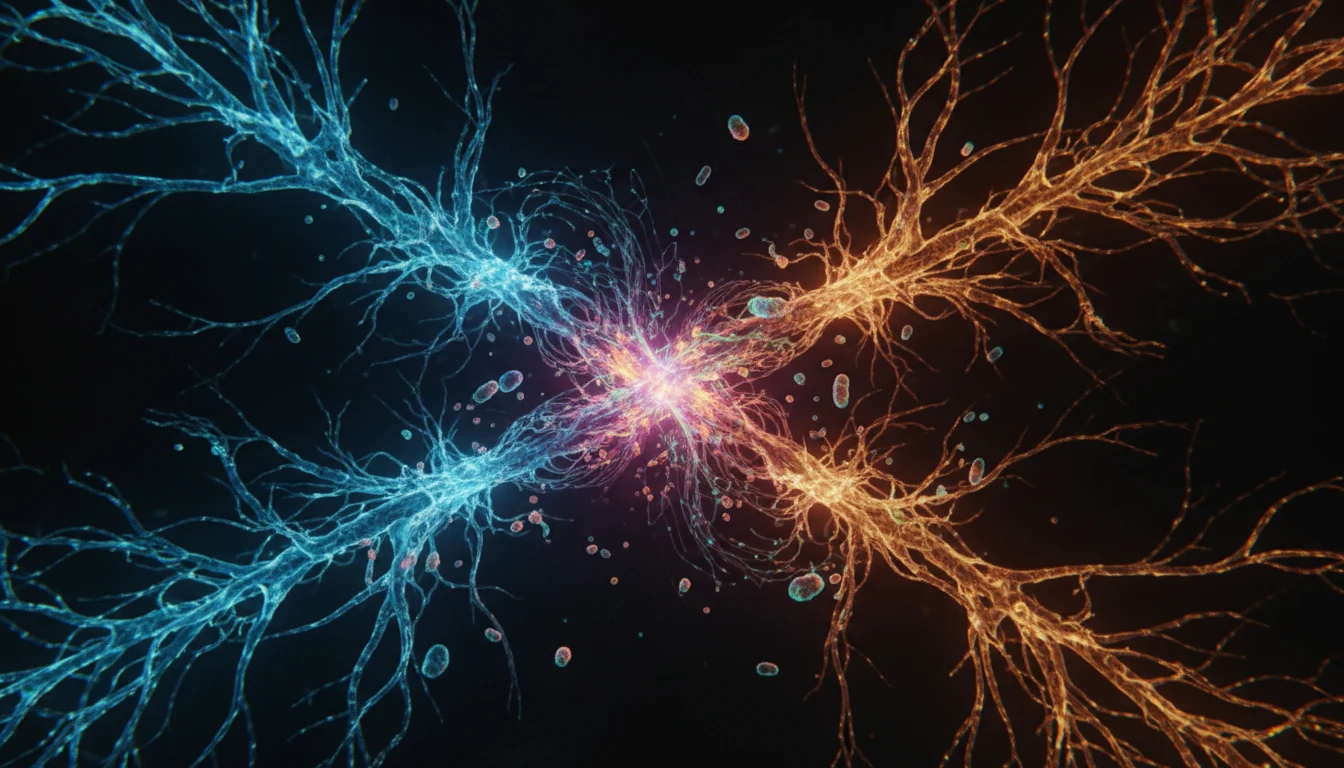
When a tiny rodent scurries through a laboratory maze, tracking cameras record its every move. To the naked eye, it looks and acts like any ordinary mouse. But inside its skull, a profound biological crossover has occurred: nearly half of its brain volume consists of human cells.
In a landmark study published in Nature, a Stanford University team led by neuroscientist Sergiu Pașca has successfully created what they call "xenocortical mice." The researchers started by genetically engineering mice to develop without a cortex or hippocampus—the brain regions essential for memory and spatial navigation. While these modified mice could still walk and vocalize normally, they were predictably terrible at navigating mazes, unable to remember which paths they had already explored.
The team then injected human brain "organoids"—tiny, lab-grown clusters of neural tissue—into the brains of the infant rodents. Given the empty space in the modified brains, the human cells thrived. They divided, grew, and remarkably, wired themselves into the mouse's existing nervous system.
The true magnitude of this breakthrough became apparent when these chimeric mice were placed back into the maze. Their memory and navigation skills had significantly improved compared to their brain-deficient peers. The human tissue wasn't just surviving; it was actively processing information and driving the animal's cognitive functions. As Carsten Charlesworth, an independent Stanford scientist, noted, the sheer extent to which human tissue connected with a mouse nervous system across a massive species barrier is astonishing.
This seamless integration opens extraordinary doors for medicine. Scientists envision a future where lab-grown brain organoids could serve as biological "replacement parts" for human patients suffering from traumatic brain injuries or strokes, proving that neural tissue can be engineered to restore lost function.
Yet, engineering animals with human brain tissue inevitably brushes against deep ethical boundaries. Could a lab animal develop a semblance of human consciousness? For now, Pașca dismisses this concern for mice, citing the vast evolutionary gap and the sheer smallness of a rodent's skull.
However, the success of this experiment has prompted the researchers to draw a hard ethical line. Pașca emphatically warns against replicating this procedure in higher species, particularly primates. Doing so could blur the cognitive boundaries between human and animal, raising profound moral questions about the nature of consciousness. As biotechnology accelerates at an unprecedented pace, defining the strict limits of our medical ambition may prove just as critical as the scientific breakthroughs themselves.
Key Points
- Stanford researchers implanted human brain organoids into mice engineered to lack key brain regions.
- The human cells grew to make up nearly half the mice's brain volume and successfully integrated into their nervous systems.
- Mice with human brain tissue showed improved memory and cognition in maze tests.
- The breakthrough offers potential new treatments for human brain injuries and strokes.
- Scientists established a strict ethical boundary, warning against performing similar experiments on primates.
Why It Matters
By demonstrating that human neural tissue can function within another species, this research paves the way for revolutionary brain injury treatments while urgently highlighting the need for strict bioethical boundaries.
Sources:
- Meet a mouse whose brain cortex is made up of human cells — MIT Technology Review - AI
更多专栏

Your Next Coworker is a Blob That Orders Burritos
For decades, enterprise software has been synonymous with sterile dashboards, en...

The Midnight Bill: Why AI Agents Demand Hard Budget Caps
The dream of artificial intelligence is to have a tireless digital assistant wor...

Beyond Transformers: How Mamba is Rewriting the Rules of AI Memory
Think about how a human reads a sprawling, thousand-page fantasy series. You don...