The Death of the Eureka Moment?
For centuries, the lifeblood of scientific discovery hasn't just been brilliant answers, but brilliant questions. From the letters exchanged by early European...
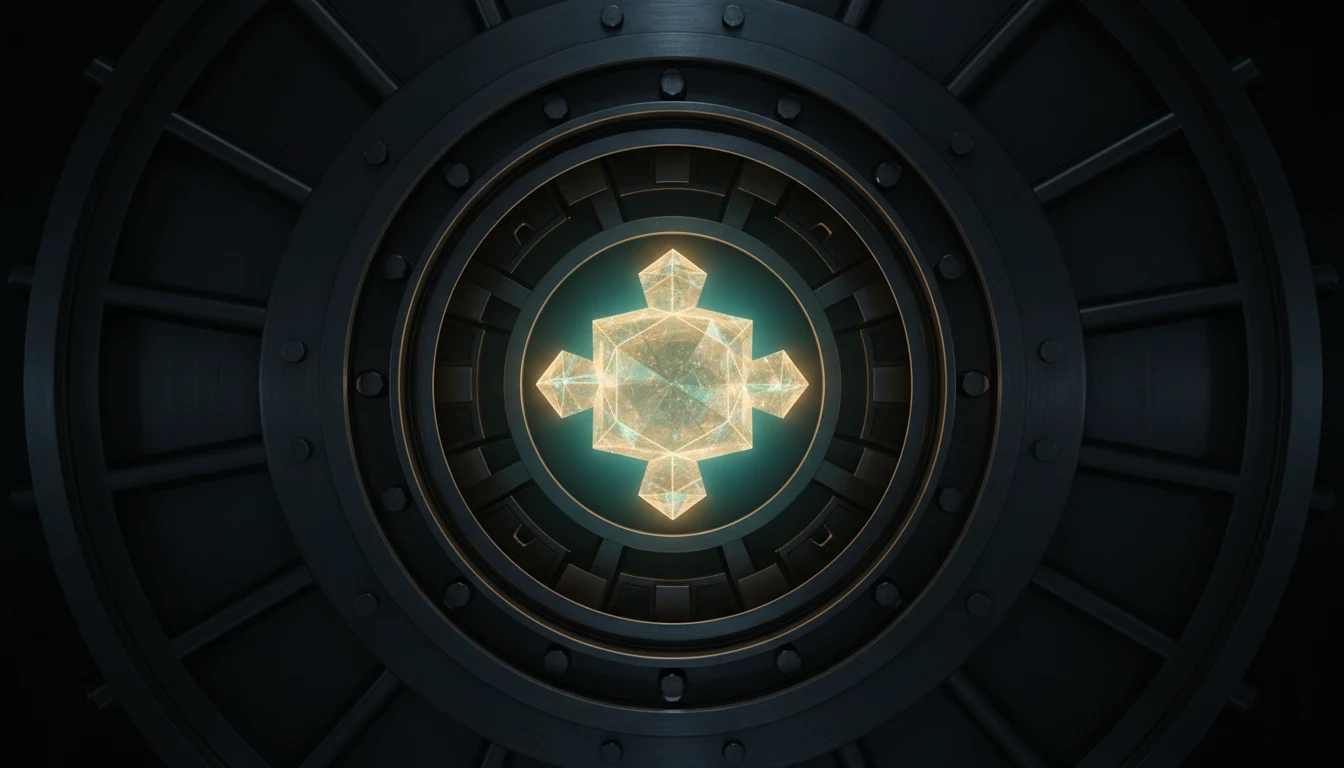
For centuries, the lifeblood of scientific discovery hasn't just been brilliant answers, but brilliant questions. From the letters exchanged by early European mathematicians to today's bustling academic conferences and open preprint servers like arXiv, scholars have historically broadcast their most promising, unsolved problems to the world. They shared these "open problems" trusting that collective human effort, over years or decades, would eventually crack them.
But what happens when artificial intelligence can listen in, mobilize massive computational power, and solve those problems before the original researchers even finish drafting their preliminary notes?
According to renowned mathematician Terence Tao, the sheer speed and brute force of modern AI are creating an unexpected and profound crisis in the scientific community: a chilling effect on the sharing of ideas.
Tao recently highlighted a troubling phenomenon regarding how we treat the intellectual raw material of science. The world’s supply of "fruitful open problems"—the deeply layered puzzles that traditionally guide human researchers toward new discoveries—is currently being mined by AI in a rapid, non-renewable way. In the past, tackling a major open problem required building new theoretical frameworks, a slow process that educated generations of students and spawned entirely new academic sub-fields. Today, AI models can increasingly brute-force or accelerate their way to a solution.
The most alarming shift, however, is behavioral. Tao notes that today, the mere rumor of a scientist working on a specific, highly promising problem can trigger an avalanche of AI-powered effort from competing labs. These well-resourced systems can effectively "flatten" a research project almost instantly. They solve the problem rapidly, stripping the original human scientists of the opportunity to nurture their ideas, explore the nuances, and reach the project's full potential.
This dynamic creates a deeply perverse incentive structure. If sharing a half-formed idea, a clever hypothesis, or an exciting new direction means a competitor will use AI to scoop your discovery in a matter of days, the most logical response is absolute secrecy. Researchers are becoming increasingly motivated to hide their work, hoarding their insights behind closed doors until a final paper is ready for publication.
This defensive posture threatens to reverse hundreds of years of open science traditions. The collaborative spirit that built the modern world risks being replaced by academic paranoia. As we marvel at AI's unprecedented ability to solve complex equations, discover new materials, and fold proteins, we face a critical structural challenge. We must figure out how to redesign the incentives of academic recognition, ensuring that the fragile human ecosystem of curiosity and open dialogue—the very engine that generates great questions in the first place—is not inadvertently destroyed by the machines built to answer them.
Key Points
- Mathematician Terence Tao warns that AI is mining fruitful open problems in a non-renewable, destructive manner.
- The mere rumor of a new research direction can trigger massive AI efforts to solve it before human researchers can fully develop their ideas.
- This creates a perverse incentive for scientists to hide their preliminary work rather than share it with peers.
- The shift toward absolute secrecy threatens hundreds of years of collaborative open science traditions.
Why It Matters
Understanding how AI alters the incentive structures of academia is crucial, as the loss of open collaboration could severely stunt long-term scientific progress.
Sources:
- Quoting Terence Tao — Simon Willison's Weblog
更多专栏
Your Next Coworker is a Blob That Orders Burritos
For decades, enterprise software has been synonymous with sterile dashboards, en...
The Midnight Bill: Why AI Agents Demand Hard Budget Caps
The dream of artificial intelligence is to have a tireless digital assistant wor...
Beyond Transformers: How Mamba is Rewriting the Rules of AI Memory
Think about how a human reads a sprawling, thousand-page fantasy series. You don...