The 2.5-Hour AI Epic That Forgot How to Tell a Story
For decades, independent filmmakers have dreamed of a world where imagination is the only limit, free from the constraints of massive Hollywood budgets. With...
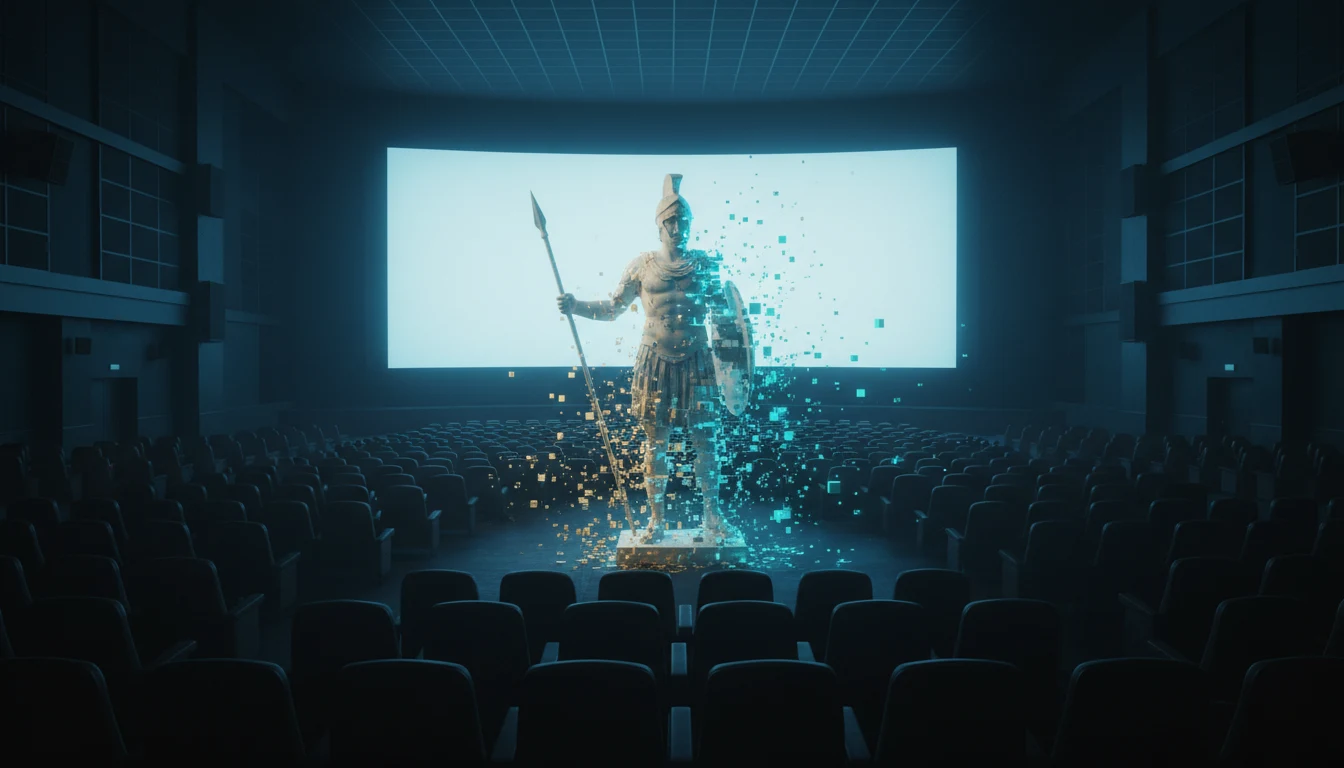
For decades, independent filmmakers have dreamed of a world where imagination is the only limit, free from the constraints of massive Hollywood budgets. With the explosion of generative AI, that dream seemed closer than ever. But a recent attempt at a feature-length AI epic proves that having the tools to make a movie doesn't necessarily mean you have a movie worth watching.
Enter Odysseus: The Fall, a massive 2.5-hour retelling of the classic Homeric epic, produced by the AI firm Fountain 0. The project is the ultimate test of the "one-man studio" concept. Company cofounder Ash Koosha didn't just write and direct the film; he composed the entire score and even used his own likeness to portray the titular Greek hero. The studio isn't entirely without pedigree, either—their previous AI-driven work, Dreams of Violets, made its way into the prestigious Tribeca Film Festival earlier this year.
Yet, scaling up from a well-received festival short to a 150-minute cinematic journey proved to be a bridge too far. Early reception has been brutal. Critics have pointed out that the film is an exhausting watch, with reviewers noting that it is so poorly executed it might make audiences despise the original classic altogether. One critique bluntly stated that the 2.5-hour runtime was simply 2.5 hours too long.
This ambitious failure highlights a crucial blind spot in the current AI hype cycle. We are constantly dazzled by AI's ability to generate stunning, photorealistic five-second clips. But a feature film is not just a sequence of pretty images stitched together; it is an exercise in pacing, emotional endurance, and narrative architecture. Generative models operate by predicting the next frame or stringing together visual patterns, but they fundamentally lack the human intuition required to build tension, convey subtext, or sustain a character arc over a couple of hours.
Odysseus: The Fall serves as a fascinating, if painful, milestone in the evolution of digital art. It confirms that while AI has successfully democratized the mechanics of production—allowing one person to do the work of an entire crew—it cannot synthesize the soul of a storyteller. The technical barrier to making a film has vanished, but the artistic barrier remains firmly intact.
Key Points
- Fountain 0 released a 2.5-hour AI-generated film, Odysseus: The Fall, which was heavily panned by critics.
- The film was essentially a one-man project by Ash Koosha, highlighting AI's power to democratize film production.
- Despite previous success with an AI short film at Tribeca, the studio struggled to maintain quality in a feature-length format.
- The failure underscores AI's current inability to handle pacing, emotional depth, and long-form narrative structure.
Why It Matters
As AI video generators become widely accessible, this case study demonstrates that while AI can replace cameras and crews, it cannot yet replicate the human intuition required for compelling long-form storytelling.
Sources:
- The 2.5-hour AI-generated Odyssey movie is 2.5 hours too long — The Verge - AI
更多专栏
Your Next Coworker is a Blob That Orders Burritos
For decades, enterprise software has been synonymous with sterile dashboards, en...

The Midnight Bill: Why AI Agents Demand Hard Budget Caps
The dream of artificial intelligence is to have a tireless digital assistant wor...
Beyond Transformers: How Mamba is Rewriting the Rules of AI Memory
Think about how a human reads a sprawling, thousand-page fantasy series. You don...