Dying in Plain Sight: The Blind Spots of an AI Border Wall
Imagine a strip of land so heavily monitored that it features interconnected AI towers, underground sensors, radar, drones, and even satellite surveillance....
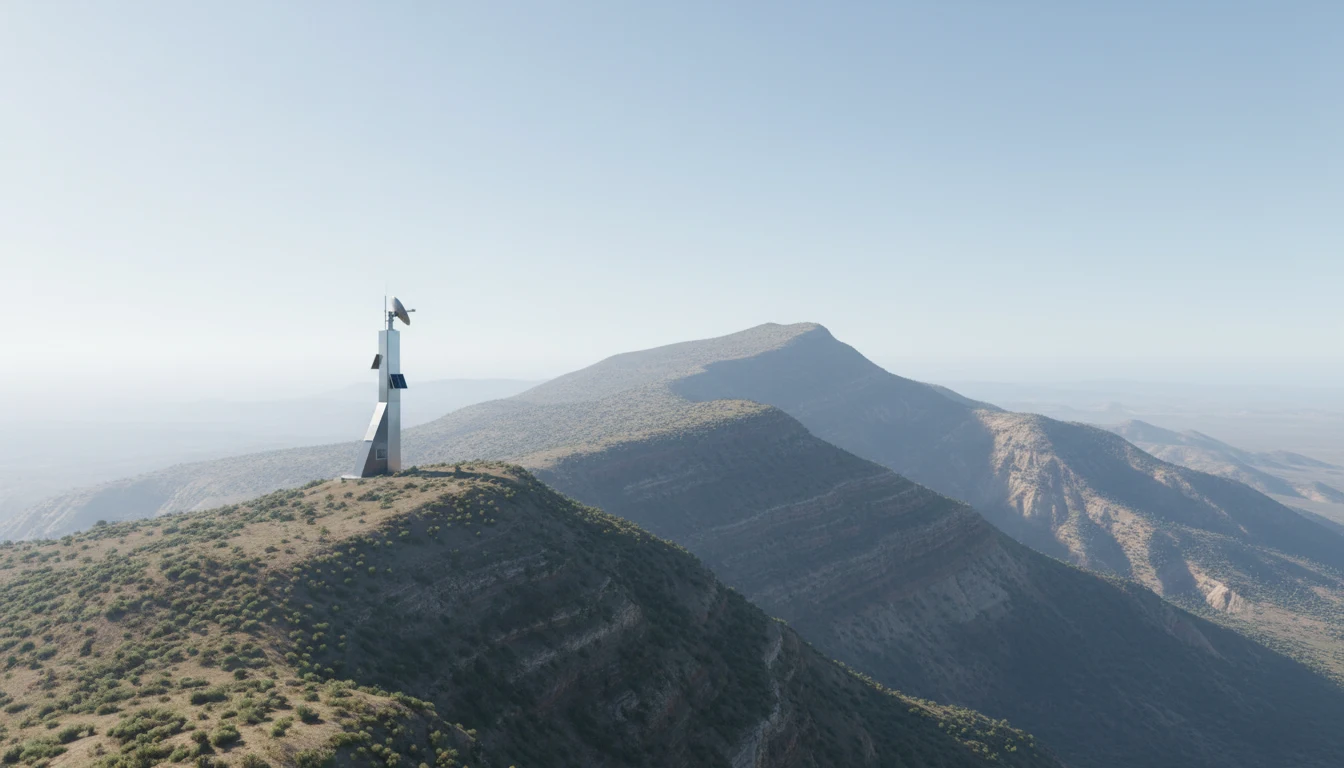
Imagine a strip of land so heavily monitored that it features interconnected AI towers, underground sensors, radar, drones, and even satellite surveillance. Now imagine dying of exposure in the middle of it, just one mile from a camera designed to see for miles.
This is the harsh reality of the Otay Mountain Wilderness near San Diego. In September 2025, a 30-year-old mother named Graciela Gómez Hernández succumbed to the elements here. Just a mile away stood a slender surveillance tower equipped with long-range electro-optical and infrared cameras capable of tracking targets up to seven miles out. Yet, her distress went unanswered, and her body was not recovered for two weeks.
The paradox of the modern "virtual border wall" is that its artificial intelligence is remarkably good at detecting movement, but tragically indifferent to human suffering. A comprehensive topographical analysis by MIT Technology Review revealed that over the past four years, at least 138 migrants died within the theoretical range of surveillance cameras in California alone. In more than half of these cases, there was a clear, unobstructed line of sight from the camera to the victim.
The victims include a 51-year-old man who died of heatstroke just 1,300 feet from an AI tower, and a 28-year-old who succumbed to hypothermia 1,400 feet from a remote video feed. They died in the heat and the cold, entirely isolated, yet deeply surveilled.
The United States has poured over a billion dollars into upgrading border surveillance, deploying more than 120 towers in California alone. These newer systems use artificial intelligence to automatically distinguish humans from wildlife and track their movements across rugged terrain. However, this vast technological apparatus is optimized for a singular, rigid goal: interception. The algorithms are trained to flag unauthorized entry, not to detect medical emergencies, exhaustion, or a need for humanitarian aid.
The situation at the border raises a profound ethical question about how we deploy artificial intelligence in vulnerable environments. We have built systems capable of achieving near-perfect situational awareness, yet they remain fundamentally blind to human crisis. It serves as a stark reminder that while AI can give us the unprecedented power to monitor everything, it cannot inherently teach a system to care. When technology is deployed without a humanitarian mandate, even the most advanced lenses will fail to truly see the people in front of them.
Key Points
- Migrants are dying of exposure within close range of advanced AI border surveillance towers.
- A recent analysis found 138 remains within camera range in California over four years, with over half in clear line of sight.
- The billion-dollar AI network is highly capable of tracking movement but is not designed to trigger humanitarian rescues.
- The tragedy highlights the ethical gap between technological surveillance capabilities and human-centric system design.
Why It Matters
This highlights a critical flaw in how we deploy AI: when systems are optimized purely for security and interception, they become systematically blind to humanitarian crises unfolding in plain sight.
Sources:
- She died at the San Diego border. A surveillance camera was in plain sight — MIT Technology Review - AI
更多专栏
Your Next Coworker is a Blob That Orders Burritos
For decades, enterprise software has been synonymous with sterile dashboards, en...
The Midnight Bill: Why AI Agents Demand Hard Budget Caps
The dream of artificial intelligence is to have a tireless digital assistant wor...
Beyond Transformers: How Mamba is Rewriting the Rules of AI Memory
Think about how a human reads a sprawling, thousand-page fantasy series. You don...