Training Your Own Replacement
When we think about the bottlenecks in artificial intelligence, we usually picture a shortage of advanced computer chips, immense energy requirements, or the...
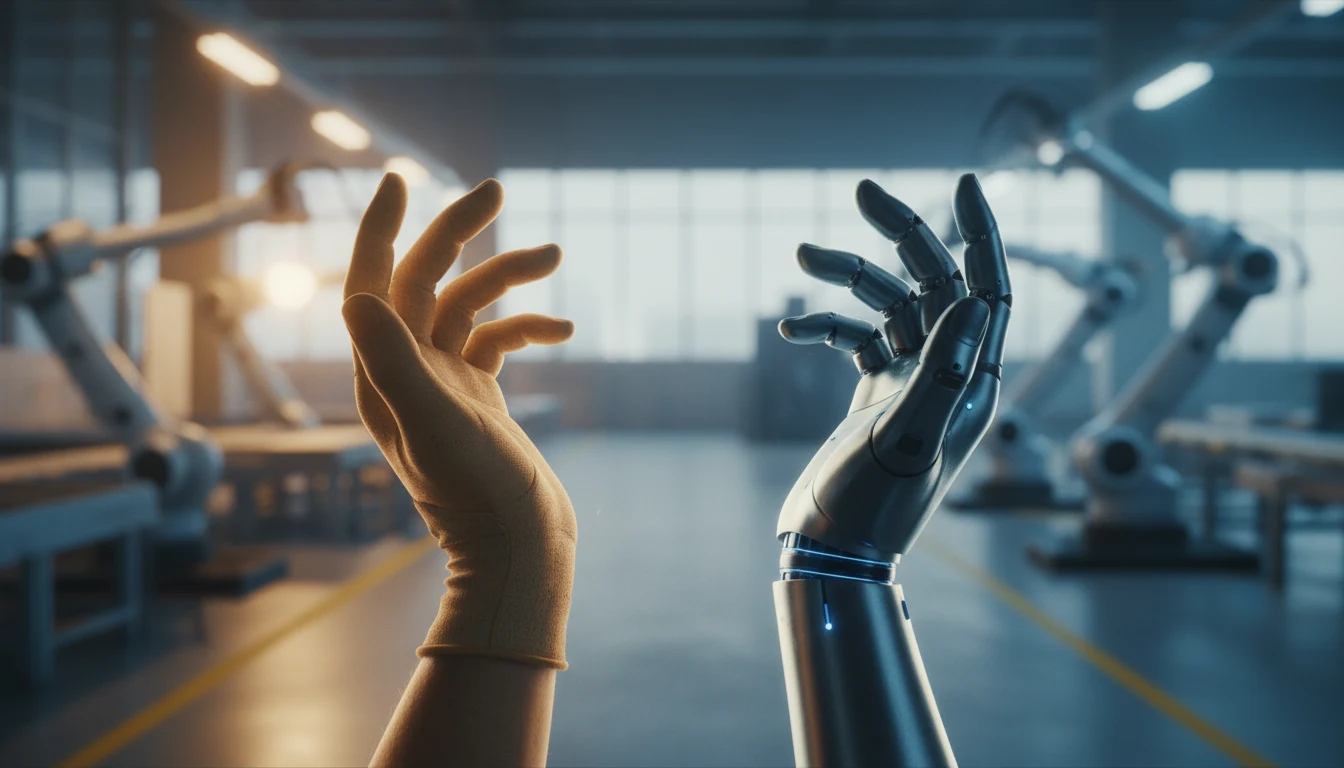
When we think about the bottlenecks in artificial intelligence, we usually picture a shortage of advanced computer chips, immense energy requirements, or the limitations of battery life. But at Tesla’s Fremont factory, the latest hurdle in the race to build humanoid robots is decidedly human: the instinct for self-preservation.
As the company aggressively pivots toward an AI and robotics-driven future, it has reportedly halted production of its flagship luxury vehicles, the Model S and Model X, as of May 2026. According to industry reports, the primary goal of this shutdown is to reallocate factory line workers and engineers to accelerate the development of Optimus, Tesla’s highly anticipated general-purpose humanoid robot.
However, this transition is proving to be friction-heavy. Employees who have been reassigned to demonstrate physical movements—essentially serving as motion-capture actors to train the robots' AI models—are pushing back against the initiative. Their reluctance is entirely understandable. These workers are effectively being asked to digitize their own physical expertise so that a machine can eventually take over their roles on the assembly line. It is the industrial equivalent of training your own replacement.
This labor friction compounds existing and significant engineering hurdles. During a 2026 earnings call, CEO Elon Musk touted Optimus as potentially "the biggest product ever." Yet, he also conceded that developing an autonomous humanoid robot capable of seamlessly performing a wide variety of tasks is one of the hardest problems the company has ever tried to solve. Replicating the intricate dexterity and tactile feedback of the human hand, for instance, remains a massive technical roadblock that is currently slowing down Tesla's ambitions for mass production.
The standoff at Tesla offers a fascinating, real-world preview of the broader societal shifts that embodied AI will inevitably trigger. For physical AI to learn how to navigate the real world and perform useful labor, it requires massive amounts of human demonstration data. Algorithms cannot learn how to fold a shirt, sort parts, or assemble machinery without humans showing them how to do it thousands of times. Yet, when the providers of that crucial data are the very workers whose livelihoods are directly threatened by the technology, the data pipeline naturally breaks down.
This scenario highlights a critical oversight in the tech industry's push for automation. It is a stark reminder that the journey toward an automated future is not just a complex engineering challenge, but a deeply human one. Building the robotic workforce of tomorrow will require companies to figure out not only how to program complex machines, but how to ethically, psychologically, and economically support the human workers who are stepping aside.
Key Points
- Tesla shifted workers from halted Model S and X production lines to its Optimus robot project in May 2026.
- Workers are reportedly resisting training the robots, fearing they are helping to automate their own jobs.
- Engineering challenges, particularly developing highly dexterous robotic hands, are also delaying mass production.
- The situation highlights a unique bottleneck for embodied AI: its reliance on human demonstration data from the very people it might replace.
Why It Matters
The friction at Tesla illustrates a fundamental paradox of the automation age: physical AI requires human expertise to learn, but humans are naturally reluctant to teach machines that threaten their livelihoods.
Sources:
- Tesla workers balk at training Optimus humanoid robots as replacements — Ars Technica AI
更多专栏

The Digital Dead Drop: How AI Agents Could Spread 'Worms'
In the world of espionage, spies often use a "dead drop"—a secret, shared locati...

The AI Gadget You Build Yourself: Meta Opens the Door for Makers
The recent wave of dedicated AI hardware has largely been defined by sleek, expe...

Why the Creators of Resident Evil Are Teaming Up With AI
Modern blockbuster video games have a scaling problem. The virtual worlds we lov...