Driving Without Pedals: Why Tesla’s Cybercab Hit a Regulatory Wall
What makes a car a "car"? If you ask a commuter, it is simply a vehicle that gets you from point A to point B. If you ask century-old traffic laws, however, it...
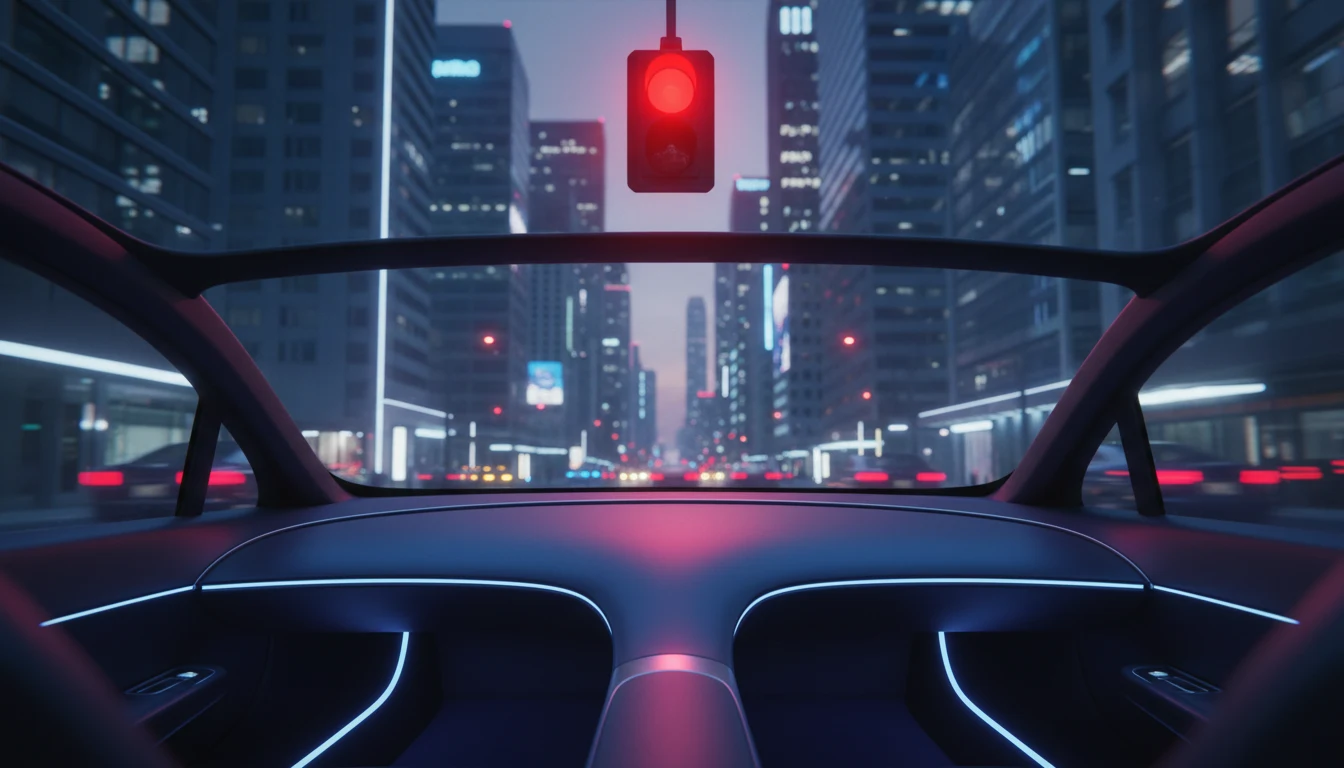
What makes a car a "car"? If you ask a commuter, it is simply a vehicle that gets you from point A to point B. If you ask century-old traffic laws, however, it is a machine strictly defined by its human interfaces: a steering wheel, brake pedals, and rearview mirrors.
Tesla’s new Cybercab—a sleek, two-seater robotaxi completely devoid of traditional manual controls—is forcing regulators to confront this exact discrepancy. Shortly after the automaker hosted an event where hundreds of enthusiasts took their first driverless rides through downtown Austin, the US federal government swiftly launched an investigation into the vehicle's compliance with federal safety standards.
The probe, initiated by the National Highway Traffic Safety Administration (NHTSA), highlights a fascinating bottleneck in the deployment of artificial intelligence. Tesla is eager to roll out the Cybercab on its Robotaxi ride-hailing network, with initial operations targeting cities in Texas and Florida. Yet, these futuristic vehicles are driving straight into a wall of legacy regulations.
The core issue isn't necessarily whether the AI can navigate a busy intersection safely. Instead, the conflict centers on the physical anatomy of the car itself. Current federal standards mandate the inclusion of specific hardware designed exclusively for human drivers. An AI system does not need to look in a rearview mirror to see what is behind it, nor does it require a physical brake pedal to stop the car.
Interestingly, the government is not entirely opposed to this evolution. NHTSA is actively working to modernize its rulebook, currently tweaking eight specific regulations to make it easier for fully autonomous vehicles to operate on public roads without unnecessary human-centric parts like windshield wipers. But bureaucratic processes inherently move slower than Silicon Valley innovation. Until those updated rules are officially codified, the old standards remain legally binding.
For the broader tech and automotive industries, this standoff serves as a vital case study. It demonstrates that commercializing AI in physical spaces requires a delicate dance with regulators. Companies cannot simply deploy revolutionary hardware and expect the law to instantly adapt.
The immediate investigation into the Cybercab illustrates a critical growing pain in the AI era. The transition to autonomous transportation has largely graduated from being a pure engineering challenge to becoming a complex legal and societal puzzle. As artificial intelligence continues to escape the digital realm and reshape our physical world, we are learning that building a smart car is only half the battle. The other half is rewriting the fundamental rules of the road to accommodate a driver that isn't human at all.
Key Points
- Tesla's Cybercab is a two-seater robotaxi built entirely without steering wheels or brake pedals.
- Shortly after public test rides in Austin, the US federal government launched an investigation into its safety compliance.
- Tesla plans to deploy the vehicles on its ride-hail networks in Texas and Florida.
- While NHTSA is currently updating eight rules to remove requirements for human-centric car parts, legacy regulations remain in force.
- The situation highlights the lag between rapid AI hardware innovation and slower regulatory adaptations.
Why It Matters
The Cybercab's immediate regulatory hurdle demonstrates that the biggest challenge for autonomous vehicles is no longer just technology, but modernizing outdated legal frameworks.
Sources:
更多专栏

Your Next Coworker is a Blob That Orders Burritos
For decades, enterprise software has been synonymous with sterile dashboards, en...

The Midnight Bill: Why AI Agents Demand Hard Budget Caps
The dream of artificial intelligence is to have a tireless digital assistant wor...

Beyond Transformers: How Mamba is Rewriting the Rules of AI Memory
Think about how a human reads a sprawling, thousand-page fantasy series. You don...