The Hidden Geometry of Soccer: How AI is Rewriting the Playbook
For decades, the data-driven "Moneyball" revolution that transformed baseball and basketball seemed to stop at the edge of the soccer pitch. The reason was...
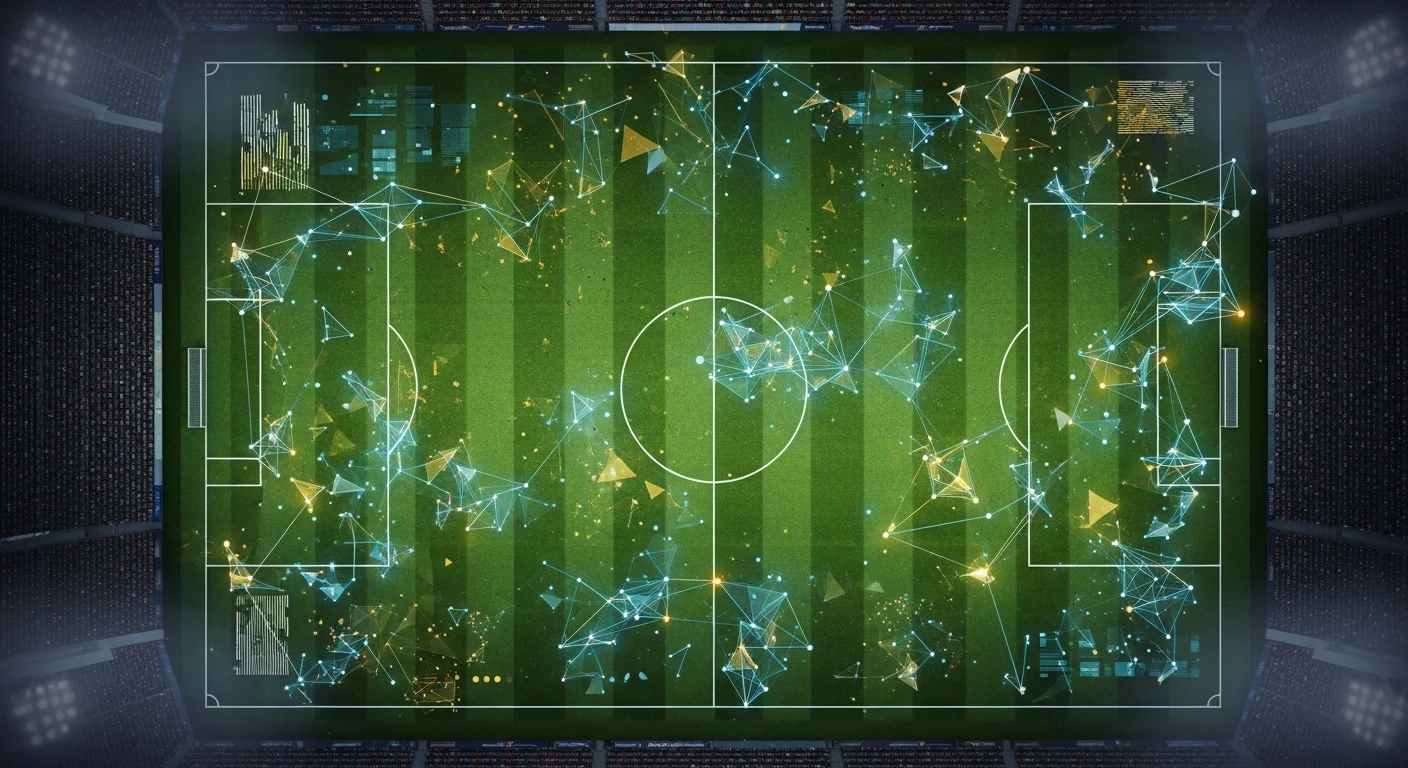
For decades, the data-driven "Moneyball" revolution that transformed baseball and basketball seemed to stop at the edge of the soccer pitch. The reason was simple: soccer is a continuous, fluid game where the vast majority of actions—passes, tackles, and sprints—never result in a shot, let alone a goal. It is a sport traditionally defined by human intuition and chaos rather than discrete, easily measurable events.
But where traditional statistics fall short, machine learning thrives. At KU Leuven in Belgium, computer science professor Jesse Davis and his Sports Analytics Lab are using artificial intelligence to decode the beautiful game, uncovering tactical advantages that often defy conventional wisdom.
Take, for example, the opening kickoff. To a casual observer, a player intentionally launching the ball out of bounds deep in the opponent’s half seems like a baffling unforced error. Why surrender possession seconds into a match?
To answer this, Davis’s team didn't rely on gut feeling; they turned to tree ensemble models. By feeding their AI a massive dataset of over 1.4 million passes and 60,000 throw-ins—including data from the 2022 World Cup—they simulated the downstream effects of this exact scenario. Their 2024 paper, aptly titled "Boot it," revealed a surprising truth: kicking the ball out of bounds in the opponent's territory sets up a highly effective defensive trap. When executed from the middle third of the pitch, this tactical sacrifice reliably puts the defending team within just 10 actions of a scoring opportunity upon recovering the ball. In a sport that averages 1,500 actions per match with notoriously low scorelines, engineering such high-probability scenarios is a massive competitive advantage.
Davis, an American who initially focused his AI research on healthcare and biomechanics, pivoted to soccer after realizing that AI’s ability to map complex, interconnected variables was the perfect tool for the sport's fluidity. Beyond the "Boot it" tactic, the lab's open-source algorithms have validated other modern trends. They have proven the statistical superiority of aiming penalty kicks down the center and quantified the value of long-range shots—a tactic that has seen a dramatic rise in professional leagues over the past decade.
Today, top-tier European clubs actively monitor these data-driven insights to gain an edge. Ultimately, the integration of AI into soccer isn't about replacing the human element or reducing players to robots. It is about illuminating the hidden patterns within the chaos, proving that even the most unpredictable sport on earth has an underlying rhythm that machines can help us understand.
Key Points
- Soccer's fluid nature and low scoring rate historically made it resistant to the statistical analysis used in other sports.
- Researchers are using tree ensemble models to analyze millions of in-game actions and uncover hidden tactical patterns.
- AI analysis proves that counterintuitive moves, like intentionally kicking the ball out of bounds, can mathematically increase scoring chances.
- Machine learning is validating modern soccer trends, such as the increase in long shots and center-aimed penalty kicks.
Why It Matters
This demonstrates AI's unique ability to extract actionable strategies from highly chaotic, continuous environments, offering a blueprint for decision-making in other complex fields.
Sources:
- Inside soccer’s data renaissance — MIT Technology Review - AI
更多专栏

Your Next Coworker is a Blob That Orders Burritos
For decades, enterprise software has been synonymous with sterile dashboards, en...

The Midnight Bill: Why AI Agents Demand Hard Budget Caps
The dream of artificial intelligence is to have a tireless digital assistant wor...

Beyond Transformers: How Mamba is Rewriting the Rules of AI Memory
Think about how a human reads a sprawling, thousand-page fantasy series. You don...