The Hidden Architecture Crisis Threatening the AI Boom
When we think about the insatiable energy demands of artificial intelligence, the conversation usually revolves around building more solar panels, wind...
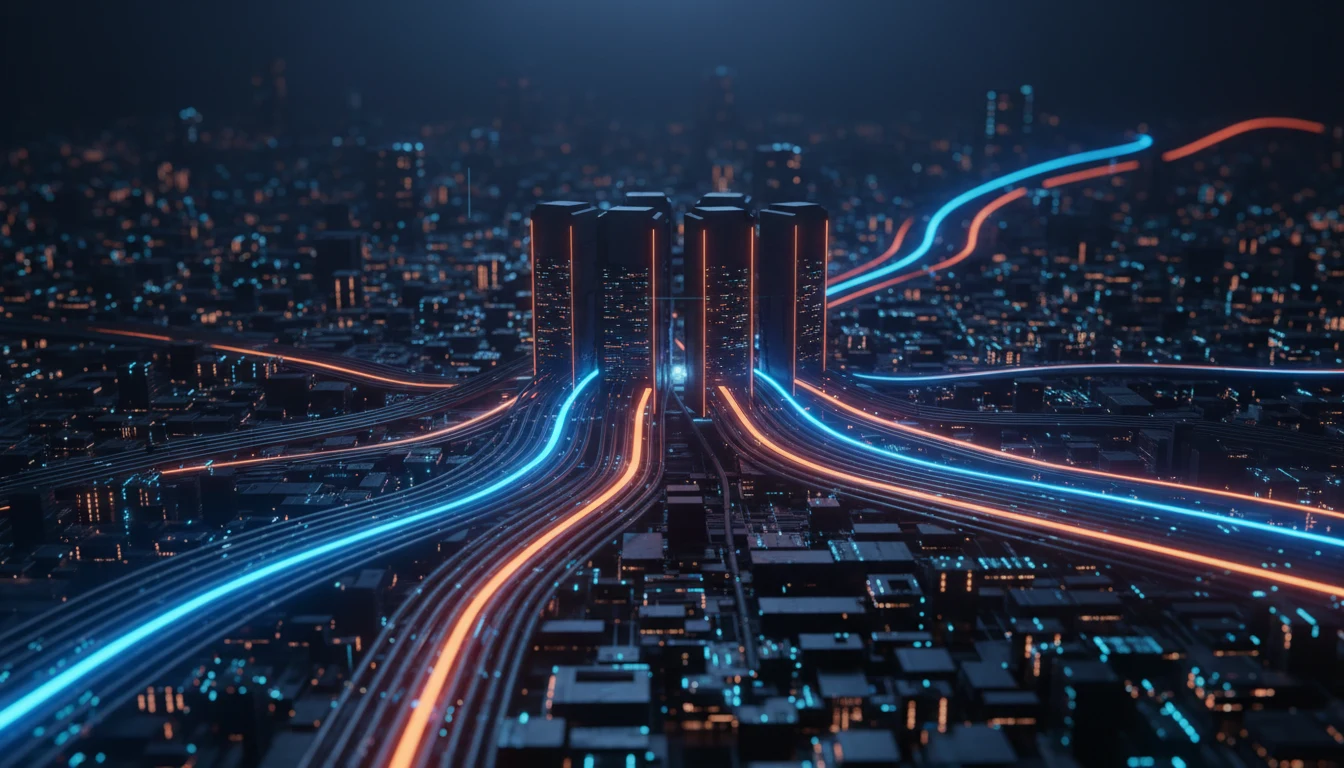
When we think about the insatiable energy demands of artificial intelligence, the conversation usually revolves around building more solar panels, wind turbines, or nuclear reactors. We assume the grid simply needs more power. But recent events reveal a much more complex problem: the grid’s fundamental architecture is incompatible with how AI actually consumes electricity.
Consider the traditional power grid. It was engineered for predictable, stable loads—steel mills running steady shifts or neighborhoods turning on ovens at dinnertime. AI data centers, however, are wildly erratic. During a massive training run, an AI campus can swing 70% of its power load in mere milliseconds.
This behavioral mismatch creates massive vulnerabilities. In 2024, a single failed surge arrester in Virginia—the world’s densest data center hub—caused roughly 60 facilities to drop 1,500 megawatts of load simultaneously. By July 2026, a similar transmission line fault in the same region knocked over 3 gigawatts off the grid in seconds.
Why does this happen? It comes down to outdated self-preservation. Traditional data centers rely on low-voltage Uninterruptible Power Supply (UPS) units buried deep inside their facilities. These systems were designed decades ago to act as temporary spare tires during blackouts, not to absorb violent, continuous load swings. Furthermore, their legacy protection logic dictates that at the first sign of upstream grid trouble (like a minor voltage dip), they must immediately disconnect to protect billions of dollars worth of GPUs. When multiple gigawatt-scale AI campuses disconnect simultaneously, they induce catastrophic shocks to the broader electrical grid.
To fix this, engineers are rethinking the entire power stack. Instead of hiding undersized batteries next to server racks, the new approach—often called a "medium-voltage AI UPS"—moves the power conditioning outside the building and scales it up to 13.8 kilovolts or higher. More importantly, it places the system directly in the power path. Rather than waiting to switch on during a failure, every electron flows through it constantly, allowing it to act as a massive, real-time shock absorber.
This isn't just theoretical. In early 2026, the U.S. Department of Energy’s National Laboratory of the Rockies subjected a full-scale inline system to brutal tests, simulating real AI load spikes and complete zero-voltage grid faults simultaneously. The system didn't flinch, easily meeting stringent grid operator requirements like those of ERCOT in Texas.
By redesigning how data centers interact with the grid, the AI industry can solve its own bottleneck. Upgraded facilities can offer a flat, predictable load profile, transforming AI campuses from volatile liabilities into stabilizing assets for our aging infrastructure.
Key Points
- AI training creates millisecond-level load swings up to 70%, which traditional grids cannot handle.
- Legacy UPS systems disconnect data centers during minor grid faults to protect GPUs, causing massive cascading grid failures.
- A new 'medium-voltage AI UPS' architecture places power conditioning outside the facility and directly in the power path to absorb shocks.
- Testing at a U.S. National Laboratory proved this new architecture can seamlessly handle severe AI load spikes and grid faults.
Why It Matters
As AI development scales up, fixing the architectural mismatch between data centers and power grids is essential to prevent catastrophic infrastructure failures.
Sources:
- Powering AI is an architecture problem — MIT Technology Review - AI
更多专栏
Your Next Coworker is a Blob That Orders Burritos
For decades, enterprise software has been synonymous with sterile dashboards, en...
The Midnight Bill: Why AI Agents Demand Hard Budget Caps
The dream of artificial intelligence is to have a tireless digital assistant wor...
Beyond Transformers: How Mamba is Rewriting the Rules of AI Memory
Think about how a human reads a sprawling, thousand-page fantasy series. You don...