Teaching Robots to Dream: The AI That Plans for the Unexpected
How do you teach a robot to navigate a living room it has never seen before? Traditionally, engineers rely on grueling real-world trial and error. But...
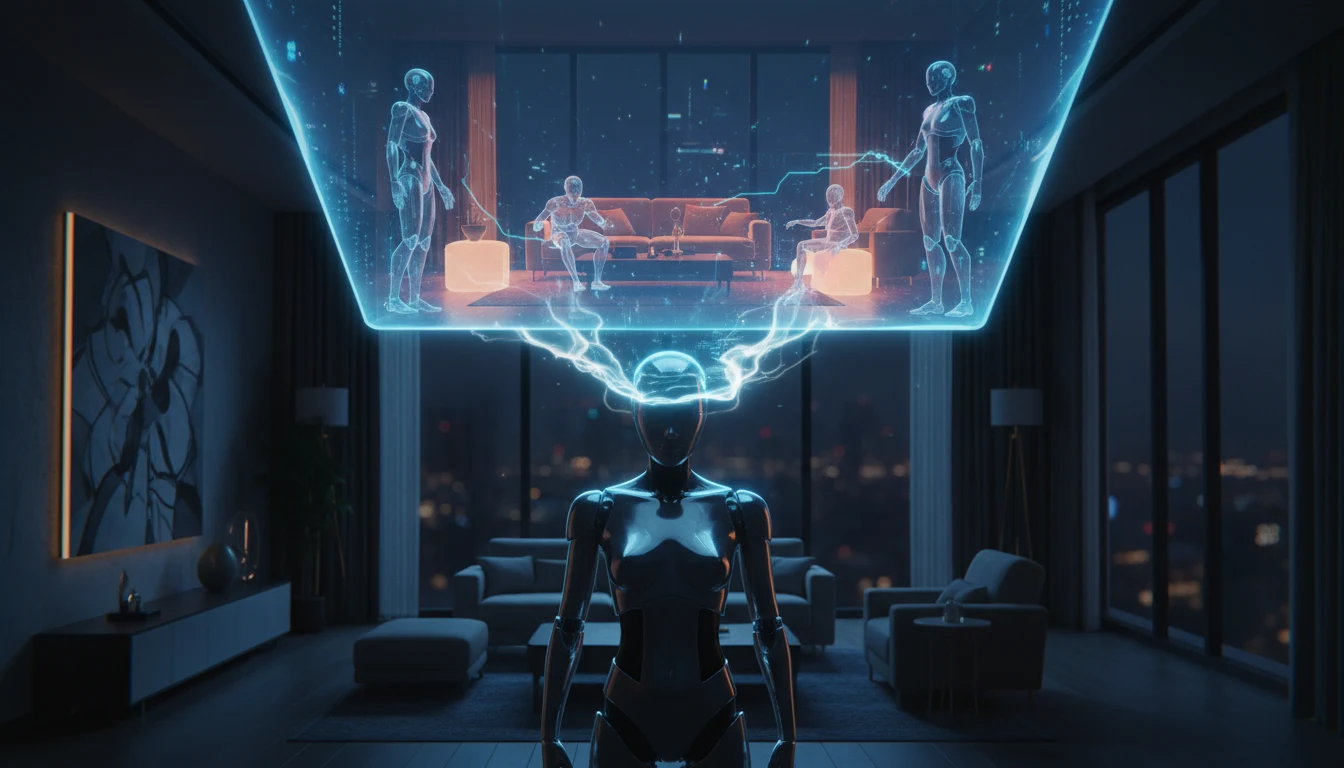
How do you teach a robot to navigate a living room it has never seen before? Traditionally, engineers rely on grueling real-world trial and error. But 31-year-old AI researcher Danijar Hafner believes the answer lies in teaching machines to "dream."
In a sparsely furnished, stealth-mode startup office in San Francisco's SoMa district, humanoid robots imported from China hang from racks like marionettes. These machines are the physical vessels for Hafner’s ambitious project: building AI agents capable of anticipating the unexpected.
After leaving Google DeepMind in the fall of 2025, Hafner has focused entirely on a technique known as model-based reinforcement learning. Instead of forcing a robot to stumble through a physical room until it learns to avoid a new coffee table, Hafner’s AI constructs a "world model"—an internal simulation of physical reality. The agent uses this mental sandbox to imagine future scenarios and plan its actions accordingly, bypassing the need for endless physical testing.
Hafner’s trajectory has long been focused on understanding how thinking works. Growing up in rural Germany, he taught himself programming and eventually landed a role at Google Brain as a college sophomore. Over the years, he collaborated with AI pioneers and built a reputation as an engineer who could single-handedly construct systems that normally required entire teams.
His algorithms already have a proven history of conquering complex virtual environments. His "Dreamer" series made headlines by achieving human-level performance in classic Atari games and autonomously mining diamonds in the notoriously open-ended game Minecraft. Remarkably, the fourth iteration of Dreamer learned to mine those diamonds purely by watching offline gameplay videos, without ever directly interacting with the game environment.
Now, the challenge is bringing that predictive power into the physical world. Through his DayDreamer initiative, Hafner demonstrated that robots equipped with this algorithm can react to novel physical experiences—such as suddenly being pushed off balance—without needing specific, pre-programmed instructions for that exact event.
Described by former DeepMind colleagues as sitting in the "top half of 1%" of Google's brightest minds, Hafner is betting that these predictive capabilities are the missing link in robotics. If robots can internally simulate and prepare for the messy, unpredictable nature of human spaces, we may finally see them step out of tightly controlled laboratories and seamlessly into our daily lives.
Key Points
- Robots struggle in new environments because traditional training relies on extensive real-world trial and error.
- Danijar Hafner's stealth startup uses 'world models' to let AI simulate physical reality internally and plan ahead.
- The technology, which previously mastered complex video games like Minecraft, is now being tested on humanoid robots.
- This approach allows robots to handle unexpected physical events, like being pushed, without specific prior training.
Why It Matters
Equipping robots with the ability to internally simulate and predict outcomes is a crucial step toward general-purpose robotics. It bridges the gap between controlled lab environments and the chaotic reality of human homes.
Sources:
- This AI entrepreneur is developing agents that can plan ahead for the unexpected — MIT Technology Review - AI
更多专栏

Your Next Coworker is a Blob That Orders Burritos
For decades, enterprise software has been synonymous with sterile dashboards, en...

The Midnight Bill: Why AI Agents Demand Hard Budget Caps
The dream of artificial intelligence is to have a tireless digital assistant wor...

Beyond Transformers: How Mamba is Rewriting the Rules of AI Memory
Think about how a human reads a sprawling, thousand-page fantasy series. You don...