From 15 Hours to 60 Seconds: AI's Takeover of Automotive Engineering
Imagine trying to invent the airplane by simply staring at a bird, building a rough wooden wing, and hoping for the best. For centuries, this slow, agonizing...
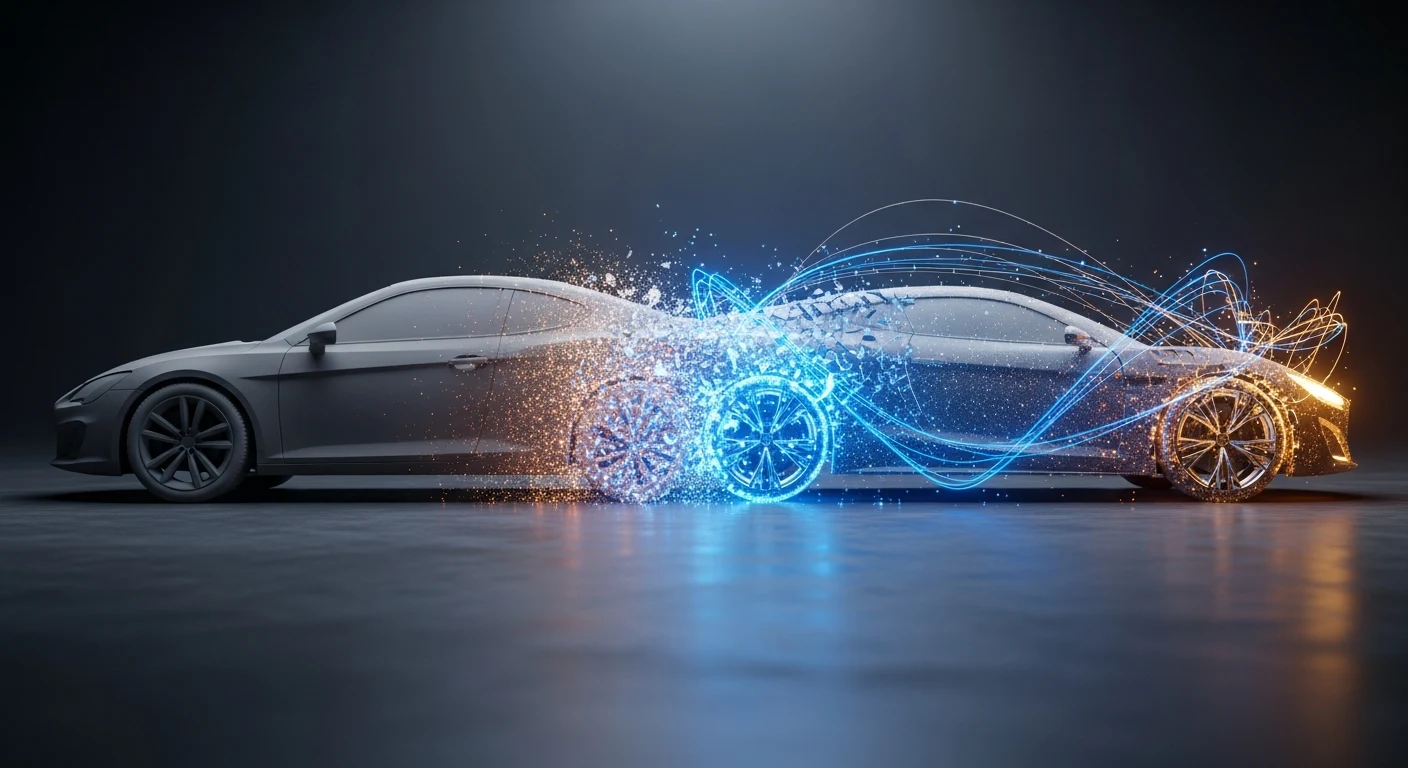
Imagine trying to invent the airplane by simply staring at a bird, building a rough wooden wing, and hoping for the best. For centuries, this slow, agonizing "guess-and-check" method was the gold standard of human engineering. You built a physical prototype, tested it, found out why it failed, tweaked it, and tried again until you had something that marginally worked.
Today, that deeply empirical era of design is drawing to a close. At General Motors, the largest automaker in the United States, artificial intelligence is compressing complex development cycles that used to take a grueling 15 hours down to a single minute.
The driving force behind this massive cultural and technological shift is Sterling Anderson. After cutting his teeth at Tesla and co-founding the highly successful autonomous vehicle startup Aurora, Anderson decamped from Silicon Valley to take on the role of Chief Product Officer at GM. He describes this current transition as the "third epoch of engineering and design," a monumental leap from the historical days of biomimicry and slow iteration.
The integration of machine learning into GM’s workflow changes the fundamental rhythm of industrial creation. Consider the psychological impact of time on innovation. A 15-hour simulation or design iteration means that engineers must be incredibly careful and conservative with their ideas. Testing a wild, out-of-the-box hypothesis is a risky gamble; if it fails, you've wasted an entire day of computing and engineering resources.
However, when that exact same process takes only 60 seconds, the cost of curiosity drops to zero. Engineers can ask "what if?" dozens of times before lunch. They can instruct AI models to explore radical aerodynamic shapes, novel material distributions, or unconventional structural layouts that a human mind might never intuitively guess. The AI does the heavy lifting of simulating and validating these ideas almost instantly.
This acceleration proves that artificial intelligence is no longer confined to the realm of chatbots or software labs. It is actively rewiring the industrial heart of traditional manufacturing. The vehicles of tomorrow won't just be built faster—they will be the product of an engineering process that has finally evolved beyond the limitations of human trial and error, blending the massive scale of legacy automakers with the blistering speed of a tech startup.
Key Points
- General Motors is utilizing machine learning to reduce specific engineering tasks from 15 hours to just one minute.
- GM's Chief Product Officer, Sterling Anderson, views this as the dawn of the 'third epoch of engineering.'
- Historically, engineering relied on a slow, empirical 'guess-and-check' process to achieve marginally feasible results.
- Reducing iteration time to 60 seconds eliminates the high cost of trial and error, encouraging bolder design innovations.
Why It Matters
By drastically reducing the time it takes to test new ideas, AI is allowing legacy manufacturers to innovate at the speed of software startups, fundamentally changing how physical products are designed.
Sources:
- From 15 hours to one minute: How AI/ML is speeding up GM's development — Ars Technica AI
更多专栏

Your Next Coworker is a Blob That Orders Burritos
For decades, enterprise software has been synonymous with sterile dashboards, en...

The Midnight Bill: Why AI Agents Demand Hard Budget Caps
The dream of artificial intelligence is to have a tireless digital assistant wor...

Beyond Transformers: How Mamba is Rewriting the Rules of AI Memory
Think about how a human reads a sprawling, thousand-page fantasy series. You don...